
Shopping for “stronger erections” can feel tempting—especially when a small bottle like Vigoradil promises boosted “male energy” right from your bathroom shelf. But before you spend your money, it’s smart to pause and look beyond the marketing. Supplements can vary widely in what they actually contain, how consistently they’re dosed, and how transparently they’re sourced—so understanding the ingredient list, the credibility of any evidence behind the claims, and how the product is made can help you avoid surprises.
In this Vigoradil review, you’ll learn what to check before buying, including ingredient sourcing and proof, suggested dosage considerations, and potential side effects. You’ll also want to pay close attention to drug interactions—particularly if you have cardiovascular concerns or take medications such as nitrates—so you can decide whether it aligns with your health needs and safety expectations.
Great Points
- Vigoradil is an OTC sexual wellness supplement, not an FDA-approved medication for erectile dysfunction.
- Check whether the label clearly lists ingredients, dosages, and standardized extracts, and confirms GMP-compliant manufacturing.
- Review evidence consistency: effects may be subtle in days and more noticeable after weeks, with mixed support by component.
- Watch for side effects like stomach upset, headache, dizziness, or sleep changes, and avoid use if contraindicated.
- Confirm interaction risks with blood pressure/vasodilators or anticoagulants, and verify seller reliability, pricing, and subscription terms.
What Vigoradil Review Readers Usually Check
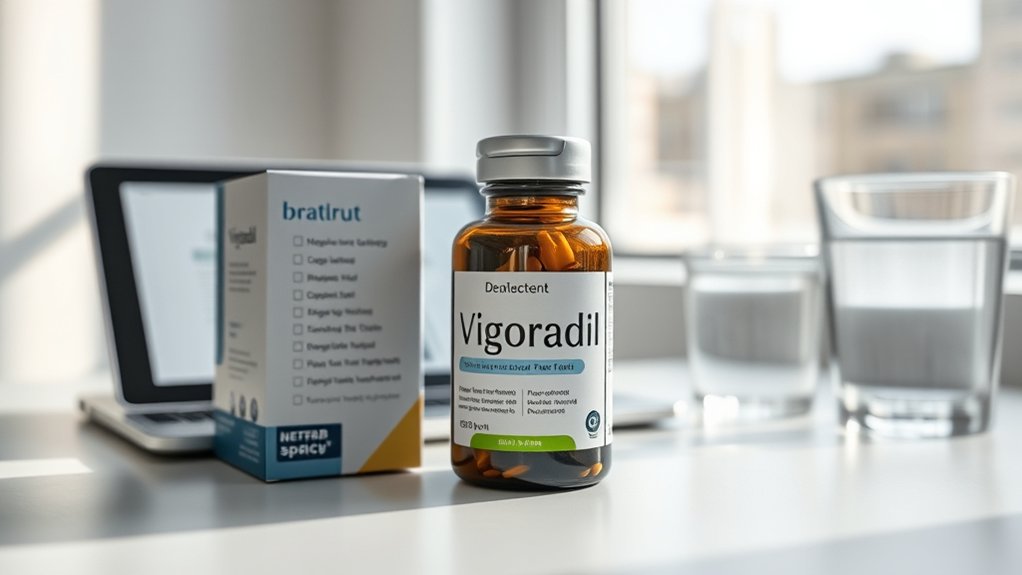
What do most Vigoradil review readers look for before they decide whether it’s worth trying? You usually start by scanning customer experiences for consistency: do users describe similar timing, results, and side effects, or do claims vary wildly? Next, you look for expert opinions that reference credible mechanisms and human evidence, not just anecdotes. You also check whether the product lists active ingredients, dosages, and manufacturing details such as GMP compliance, because transparency affects safety. Regulatory awareness matters too: you confirm whether the brand avoids “cure” claims and follows labeling rules for supplements. Finally, you assess risk signals—warnings for allergies, interactions, pregnancy, or age limits—then decide if it’s appropriate to discuss with your clinician.
What Is Vigoradil and Who It’s For
Vigoradil is marketed as an over-the-counter sexual wellness supplement, typically positioned to support healthy erectile function and overall male energy rather than treat or “cure” any medical condition. If you’re considering it, you’re likely aiming to explore possible Vigoradil benefits, but you should treat claims carefully: supplements aren’t the same as FDA-approved drugs, and evidence quality can vary.
It’s generally intended for adults who want a non-prescription option for sexual wellness. Your target audience may include men with occasional concerns about performance or low energy, especially when they’re otherwise healthy. However, if you have cardiovascular disease, use nitrates, or take prescription erectile medications, don’t self-start—talk with a clinician first, since interactions and contraindications are possible.
Vigoradil Ingredients Breakdown and Key Actives
Vigoradil’s formula is typically made up of a blend of plant-based and other “supportive” ingredients that are commonly marketed for circulation, nitric-oxide signaling, and antioxidant activity—mechanisms that, in theory, may help with erectile function and general sexual wellness. When you review the label, focus on ingredient sourcing: reputable manufacturers should disclose standardized extracts, parts used, and dosage ranges. Key actives you may see include L-arginine or similar precursors, plus botanical antioxidants (for example, extracts from grape seed, citrus, or pomegranate) aimed at oxidative stress reduction. Evidence for individual components is mixed, and results depend on timing, dose, and baseline health. Safety matters: check for allergy risks, drug interactions (especially nitrates or blood-pressure meds), and third-party testing. Also consider active synergy, where combined antioxidants and NO-supporting compounds may provide additive support.
How Vigoradil Works in the Body (Theories)
When you take Vigoradil, you may see effects that fit with modulation of nitric oxide pathways—mechanisms linked to vascular relaxation and blood-flow regulation. By supporting improved blood-flow efficiency, it could help deliver oxygen and nutrients where they’re needed, though real-world outcomes still depend on the specific product’s studied actives and dosing. Some theories also suggest enhanced cellular energy production, but you should treat these as mechanistic hypotheses and follow labeling and safety guidance, especially regarding interactions and regulated use.
Modulation Of Nitric Oxide Pathways
To understand how Vigoradil may work, it helps to look at nitric oxide (NO) biology and how supplements can influence NO-related signaling without directly overstating claims. You’ll see NO synthesized from L-arginine pathways, then used to activate soluble guanylate cyclase and smooth muscle relaxation—mechanistically relevant for cardiovascular health, but not guaranteed in every person. Proposed theories for “modulation” focus on supporting upstream availability and limiting breakdown. Consider these evidence-grounded angles:
- Enhancing substrate supply for NO production, indirectly affecting signaling tone.
- Reducing oxidative stress that can scavenge NO, lowering functional loss.
- Influencing endothelial signaling balance, potentially improving responsiveness.
Safety matters: if you take nitrates, PDE5 inhibitors, or have heart disease, talk to your clinician first, since NO-pathway changes can interact.
Improved Blood Flow Efficiency
Building on how nitric oxide signaling may be supported, a key theory behind Vigoradil’s “improved blood flow efficiency” is that it could help your blood vessels maintain a more favorable tone—so blood can move with less functional resistance. In practice, you’d expect better microvascular perfusion, which can be relevant to symptoms like cold extremities. The evidence for direct vessel-tone changes from specific ingredients varies, so you should treat these claims as mechanistic hypotheses until robust human data exist. Safety-wise, you should follow label dosing, avoid combining with nitrates or blood-pressure–lowering drugs without clinician input, and watch for dizziness or headaches. Alongside Vigoradil, stick to evidence-based blood circulation techniques and vascular health tips like regular walking, hydration, and not smoking.
Enhanced Cellular Energy Production
Vigoradil’s potential “enhanced cellular energy production” is mainly a mechanistic hypothesis: certain ingredients may support mitochondrial function and cellular energy pathways so your cells can generate ATP more efficiently under everyday stress. In theory, this could influence cellular respiration and energy metabolism, particularly when oxygen delivery or substrate availability is suboptimal.
To think about how this might work, consider:
- Mitochondrial support: compounds may help preserve membrane potential and enzyme activity involved in ATP synthesis.
- Cofactor availability: nutrients or polyphenols could act as redox cofactors, affecting electron transport.
- Stress-response modulation: antioxidant and signaling effects may reduce oxidative load that can impair energy metabolism.
Safety matters: you should check dosing, interactions, and regulatory status, since human evidence may be limited and “ATP claims” aren’t universally established.
Dosage Guidance and How to Take Vigoradil
Start by checking the exact label directions on your Vigoradil packaging and the prescribing clinician’s instructions, since dosing can vary by product formulation and your individual health status. Vigoradil may come in different dosage forms, so only follow the dose matched to your specific product. If you’re unsure, ask a pharmacist or prescriber before taking another amount. Many people use timing strategies—like taking it at the same time each day—to support consistent use, but don’t exceed the labeled maximum. Take it with or without food only if the label states that option; otherwise, follow the approved instructions to reduce side-effect risk. Tell your clinician about pregnancy, liver or kidney conditions, and interacting medicines. If you miss a dose, take it when remembered unless it’s near the next dose.
Expected Timeline for Results and Progress
Once you’ve confirmed the correct dosage guidance and how to take Vigoradil, the next question is when you can realistically expect changes. In clinical nutrition and supplement research, onset varies—so you should set realistic expectations and factor in individual variability. Many people report early improvements in energy or comfort within days, but other effects may take weeks because pathways and baseline health differ. For a safety-focused plan, monitor how you feel and stop or contact a clinician if you notice adverse reactions.
- Days 3–7: possible subtle changes; keep using as directed.
- Weeks 2–4: more noticeable progress for some users.
- By week 8: reassess overall response, not before.
Regulatory labeling doesn’t guarantee outcomes—only consistent use matters.
What “Success” Looks Like for Most Buyers
For many buyers, “success” with Vigoradil typically means you notice consistent, tolerable improvements in the specific outcome you’re targeting—such as better daily energy, comfort, or function—without triggering adverse effects. You should set realistic buyer expectations by defining measurable success metrics in advance (e.g., fewer low-energy episodes, improved ease of movement, or steadier day-to-day performance). Track changes using a simple log rather than relying on one-off “good days.” Evidence-based success also includes tolerability: if you experience persistent side effects, worsening symptoms, or new concerns, you stop and seek medical advice promptly. Because regulatory status and labeling can vary by region, follow the product directions exactly and don’t exceed recommended doses.
Vigoradil Reviews: Claims vs Real-World Outcomes

Vigoradil reviews often highlight promising “before-and-after” narratives, but real-world outcomes can be harder to verify than marketing claims. When you read user experiences, remember that anecdotal evidence can be influenced by timing, expectations, and concurrent lifestyle changes. Instead, look for expert opinions that cite scientific studies and explain mechanisms, not just transformations. Also, check whether claims align with regulatory standards for labeling, purity, and allowed indications—then be cautious about sweeping guarantees.
Vigoradil reviews can be influenced by marketing and lifestyle factors—verify claims against science, expert sources, and regulatory compliance.
- Compare review patterns across platforms to spot selection bias.
- Prefer outcomes that describe measurable timeframes and consistent dosing.
- Cross-check ingredients against published safety/efficacy data and compliance disclosures.
If a review doesn’t mention methodology, you’re likely seeing marketing leverage, not dependable evidence.
Possible Side Effects and Who Should Avoid It
Even if many Vigoradil reviews describe good results, it’s important to remember that any supplement can cause side effects and isn’t appropriate for everyone. Evidence on supplements varies, so you should treat product labeling and “natural” claims cautiously. Common side effects reported with similar formulas include stomach upset, headache, dizziness, and sleep changes; reactions can differ by dose and individual sensitivity. If you’re pregnant, trying to conceive, breastfeeding, under 18, or have uncontrolled blood pressure or significant heart conditions, you’re a “who avoids” candidate unless a clinician clears you. Also avoid if you’ve had allergic reactions to any ingredient.
| Who avoids | Possible side effects | Why safety matters |
|---|---|---|
| Pregnancy/breastfeeding | GI upset | Limited data on safety |
| Under 18 | Headache/dizziness | Higher unknown risk |
| Uncontrolled heart issues | BP/sleep changes | Monitoring needed |
| Allergy history | Rash, swelling | Ingredient sensitivity |
| Anticoagulant use | Side effects risk | Follow medical guidance |
Interactions to Watch If You Take Other Supplements
When you take Vigoradil alongside other supplements—or any medication—you need to think about possible interactions, because “natural” doesn’t mean “no risk,” and supplement ingredients can affect hormones, blood flow, blood pressure, or blood clotting. Before you start, use an interactions overview to check supplement compatibility with anything that alters cardiovascular or endocrine systems.
Consider interactions with Vigoradil and other supplements or meds—“natural” still can affect hormones, blood flow, blood pressure, or clotting.
Watch for:
- Blood pressure/vasodilation boosters (e.g., nitrates, some herbal relaxants): may raise dizziness or hypotension risk.
- Hormone-active ingredients (e.g., DHEA-like compounds, phytoestrogens): could shift outcomes or test results; evidence varies and labeling isn’t always precise.
- Anticoagulant/antiplatelet supplements (e.g., high-dose omega-3, ginkgo): may increase bleeding potential.
If you’re on prescription drugs, talk to a clinician or pharmacist and check regulatory labeling.
Is Vigoradil Worth It Compared to Alternatives?
To decide if Vigoradil is worth it versus alternatives, you’ll want to compare what you’re actually trying to improve, the ingredient evidence behind it, and the real-world safety profile—not just the marketing claims. Look for product comparisons that cite human data, not only lab or preclinical findings. Check whether Vigoradil and Vigoradil alternatives share similar actives and dosages, then compare third-party testing, labeling clarity, and regulatory status (e.g., GMP, FDA compliance for supplements). User testimonials can be useful for pattern-spotting, but they’re not proof of efficacy or safety. Also track market trends: new releases often mirror older formulas with minor tweaks.
| Factor | What to verify |
|---|---|
| Evidence | Human trials quality |
| Safety | Adverse event reporting |
| Testing | Third-party COAs |
| Labeling | Clear dosing, allergens |
| Claims | Avoid disease promises |
How to Spot Red Flags in Vigoradil Marketing
When you see Vigoradil marketing making vague claims or promising unrealistic results, treat that as a red flag and look for credible clinical evidence. Be especially cautious if the ads imply you’ll get specific outcomes quickly without substantiation, or if they don’t clearly state dosing, risks, and regulatory status where applicable. Finally, check the fine print for hidden fees or subscription auto-renewals so you’re not surprised by costs after ordering.
Vague Claims And Overstatements
Vague claims in Vigoradil marketing can be a major red flag, especially if the ads don’t clearly state what’s proven, how it works, and how big the effect is. If you see “works for everyone” or “clinically proven” with no study details, that’s misleading marketing and should trigger consumer skepticism. Instead, demand verifiable evidence: who was tested, what outcomes improved, and whether results were statistically meaningful. Also watch for safety omissions—no clear dosing, ingredients, or risk guidance.
Use this checklist:
- Look for peer-reviewed trials with citations, not slogans.
- Check for quantified outcomes (e.g., percent change, timelines).
- Confirm clear ingredient/dose labeling and contraindications.
When info is fuzzy, pause and consult a clinician before buying.
Unrealistic Results Promises
Unrealistic results promises in Vigoradil marketing are a major warning sign, especially if ads suggest you’ll get dramatic changes fast, without mentioning realistic timelines, study limits, or the conditions tested. If you see “guaranteed” outcomes, instant transformations, or before-and-after images without context, you should apply consumer skepticism and treat it as potentially misleading advertising. Evidence-based products explain what improvement is plausible, how it was measured, and who participated in any supporting trial. Regulated health claims can’t promise typical results that contradict the science or bypass safety considerations. Ask yourself: Are they vague on study design, safety, and measurable endpoints? If not, slow down, verify sources, and consider speaking with a qualified clinician before spending money.
Hidden Fees And Subscriptions
Hidden fees and auto-renew subscriptions are a common red flag in supplement marketing, and you should treat any “trial” offer as suspicious unless the full total cost is clearly disclosed upfront. Before you buy Vigoradil, check whether the checkout shows the complete price, including shipping, taxes, and repeat charges. If you see marketing phrases like “free trial,” confirm the exact renewal date and cancellation method in writing—regulators expect clear disclosures.
Watch for subscription traps that may trigger without easy opt-out. Use this checklist to spot hidden costs:
- Look for auto-renew terms in the fine print
- Verify every fee line item before paying
- Make sure you can cancel online instantly and keep proof
If details aren’t transparent, you can’t assess safety or value.
Choosing a Reliable Seller for Vigoradil
How can you be sure you’re buying Vigoradil from a seller you can trust? Start by checking seller reputation: look for consistent reviews, clear business identity, and a history of fulfilling orders without complaints. Be wary of accounts that won’t provide verifiable contact details or that push urgency. Next, prioritize product authenticity. Choose listings that clearly identify the manufacturer, lot/batch numbers when available, and provide credible sourcing information. For safety, confirm whether the product is regulated where you live—if it’s marketed as a supplement, it should still follow local labeling and quality expectations. Avoid “no-questions-asked” claims about medical outcomes. If a seller can’t explain ingredients, documentation, or handling, you should walk away.
Pricing, Returns, and Subscription Terms to Verify
Before you buy Vigoradil, verify the total price you’ll actually pay—including shipping, taxes, and any “first-time” discounts that may change after the initial period—so you’re not surprised later. Check subscription options carefully: affirm renewal timing, required duration, and whether discount availability ends after a trial. Use price comparison across authorized retailers, and ascertain payment methods are clearly listed and secure.
Then, review return policies before ordering. Evidence-based safety means you need a documented path if the product is damaged, expired, or doesn’t match labeling. Look for clear eligibility windows, return shipping responsibility, and refund method. Finally, confirm customer support contact routes and response expectations.
- Total checkout cost + taxes/shipping
- Subscription renewal terms + cancel steps
- Return policies + refund timeline
How to Decide Whether Vigoradil Fits Your Goals?

Start by naming your specific goal—energy, libido, or another outcome—then check whether the product’s intended use and claims align with that goal. Next, match the suggested dosage and timeline to your risk factors (age, meds, and any medical conditions), and don’t start if you can’t follow the label directions. If you’re unsure about suitability or expected effects, ask a licensed clinician and verify the supplement’s regulatory status and quality information before using it.
Identify Your Specific Goals
What goals are you actually trying to improve—sleep, sexual performance, energy, or exercise recovery? Start with goal clarity: name the exact outcome you want, and be honest about personal motivation. Evidence-based supplements should be viewed as complements, not cures; if you have symptoms like insomnia, erectile dysfunction, or low energy, it’s smart to talk with a clinician first—especially if you take nitrates or blood-pressure meds. Then, assess how Vigoradil would plausibly fit your routine and whether any claims align with regulatory guidance for your region. Use these checkpoints to narrow your priorities: 1) Track baseline for one week (sleep time, libido, fatigue, soreness). 2) Identify key triggers (stress, alcohol, training load). 3) Confirm constraints (age, conditions, medications, allergies).
Match Dosage And Timeline
Once you’ve nailed down your exact goal, you can match Vigoradil’s dosing and timeline to what you’re trying to change—because supplements only make sense when the expected effects and your schedule line up. Start with the label’s directions and choose consistent dosage timing, ideally the same time each day with food if recommended. Evidence for herbal supplements often shows modest, variable effects, so set a realistic trial window—commonly several weeks—before judging. Keep notes on benefits and side effects, including blood pressure, sleep changes, or GI upset, and stop if you experience adverse reactions.
If you’re not seeing any effect, don’t improvise. Discuss dosage adjustments with a qualified clinician, especially if you take nitrates, antihypertensives, or have cardiac conditions. Also check current regulatory status and third-party testing.
Common Questions
Does Vigoradil Include Any Allergens or Gluten-Based Ingredients?
Yes, you should check the label and confirm directly with the manufacturer: Vigoradil’s ingredients may vary, and allergen testing results aren’t always public. Look specifically for gluten sources like wheat, barley, or rye, and for common allergens such as milk, soy, eggs, fish, shellfish, tree nuts, or peanuts. For safety, don’t rely on reviews—use official packaging statements and, if needed, request current allergen testing documentation.
Is Vigoradil Vegan, and Does It Contain Soy or Dairy?
Yes—you can generally use Vigoradil if you’re vegan, but you should verify the exact Vigoradil ingredients label for your batch. Most safety guidance requires checking for milk-derived (dairy) or soy components, since formulations can vary by region. I can’t confirm soy/dairy-free status for every lot without the current label. Check Vigoradil sourcing claims and allergen statements, and consult the manufacturer or your clinician if you’re sensitive.
Can I Take Vigoradil With Blood Pressure or Diabetes Medications?
You can’t assume Vigoradil safety with blood pressure or diabetes meds without checking labels and your clinician. Because medication interactions vary by ingredient and dose, talk to your pharmacist—especially if you take antihypertensives, insulin, or sulfonylureas. Evidence-based guidance is to monitor glucose and blood pressure closely if you start any new supplement. In the US, supplements aren’t FDA-approved for claims, so use extra caution and discontinue if symptoms occur.
Will Vigoradil Show up on Drug Tests or Affect Routine Lab Results?
No, Vigoradil isn’t guaranteed to “show up” on drug testing, but you can’t assume it won’t—supplement ingredients may trigger false positives depending on the test. For routine lab results, typical oral use usually doesn’t affect standard panels, yet changes can occur with underlying health issues or interactions. To be safe, talk to your clinician and use third‑party tested products; follow local regulations and disclose supplements to the lab.
What Evidence Exists From Human Trials Supporting Vigoradil’s Effectiveness?
Clinical studies provide the clearest evidence on vigoradil’s effectiveness, but you should look for well-designed human trials: randomized, placebo-controlled, and adequately powered. Check outcomes measured, follow-up duration, and adverse-event reporting—not just marketing claims. You’ll also want participant feedback summarized transparently, including tolerability and any perceived benefits. For regulatory awareness, confirm whether results were peer-reviewed and if any authority reviews exist; otherwise, treat evidence as preliminary.
Overall
Before buying Vigoradil, take a safety-first, evidence-based approach. Review the supplement facts, verify transparent ingredient sourcing, and make sure the dosing matches the label exactly—no guesswork or “double up” experiments. If you’re taking nitrates, blood-pressure medications, or you have heart disease or other cardiovascular risk, don’t self-treat; speak with a clinician first to avoid dangerous interactions and side effects.
Then make a practical plan: track your results over several weeks (not just a day or two), monitor for any headaches or unwanted effects, and base your decision on what you can verify rather than hype or unverifiable claims. If it doesn’t deliver the expected benefits safely and consistently, stop and reassess—your health comes first, and the right choice should feel like a reliable fit, not a gamble.