
If you’re looking into Testolib, it’s worth slowing down and reading past the hype. Testosterone support supplements can sound straightforward, but the real value comes from understanding how the ingredients are meant to work—mechanism first, marketing second. In this review, we’ll unpack the formula’s approach to supporting hormonal balance, with a focus on how it may relate to Leydig cell function and testosterone production. Along the way, we’ll also look at whether the same ingredients have credible potential to affect libido, mood, energy, and training recovery.
But “promising” isn’t the same as proven. To give you real clarity, we’ll separate what the research suggests from what’s assumed, including how strong the evidence is at the effective dose—and what safety considerations you should take seriously. Side effects and individual tolerance can matter as much as expected benefits, especially when hormones are involved. Let’s dive into the ingredient list, the science behind it, and what real-world results may realistically look like.
Great Points
- Testolib is marketed as a testosterone-support supplement aiming to improve androgen signaling and support natural hormonal balance.
- Its formula targets steroidogenic pathways by supporting Leydig cell function, redox balance, and receptor activity using botanicals and cofactors.
- Users may report benefits like improved libido, mood/motivation, and training recovery via better androgen availability and nitric-oxide related effects.
- Reported muscle and strength improvements are typically linked to net protein balance and neuromuscular performance over consistent use.
- Potential side effects include acne, irritability, and sweating; avoid or consult first if you have prostate issues, hypertension, or relevant medical conditions.
What Testolib Claims to Do for Testosterone
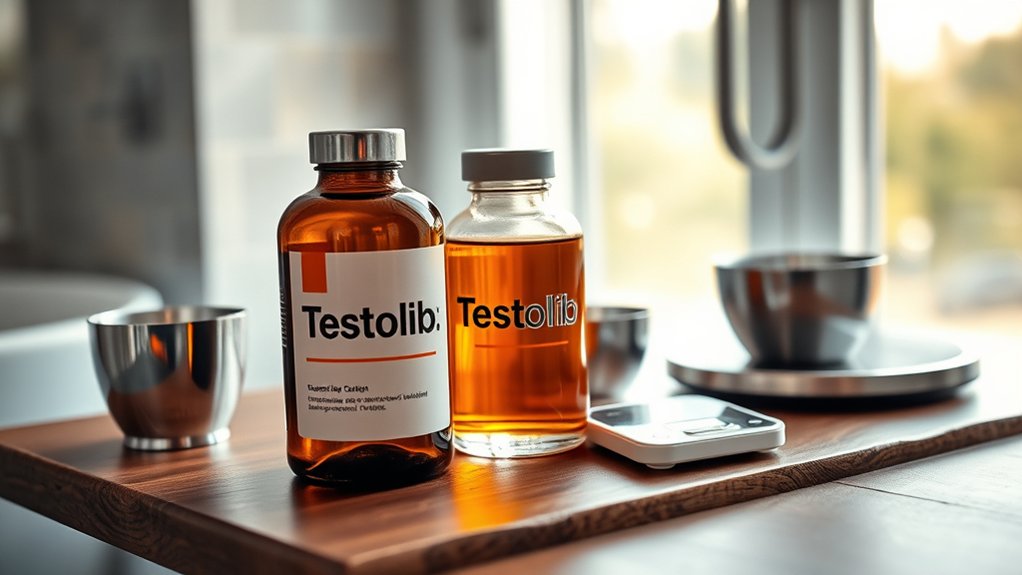
Testolib is marketed as a testosterone-support supplement, with the central claim that its ingredients can raise circulating testosterone or improve androgen signaling. You’re told this supports natural testosterone and helps maintain hormonal balance, typically by influencing the pathways that regulate Leydig cell output, androgen receptor activity, or downstream gene transcription. In an evidence-based framing, you should expect these claims to be grounded in human data showing meaningful changes in total or free testosterone, along with biomarkers tied to androgen signaling (e.g., SHBG shifts, luteinizing hormone changes, or androgen-responsive markers). Without well-controlled trials, mechanistic plausibility alone can’t confirm efficacy. As a result, you should interpret marketing as a hypothesis: if effects occur, they should be measurable, consistent across doses, and not driven by short-term placebo or confounding factors.
Testolib Ingredient List: Every Key Component
You’ll want to map each Testolib key ingredient to its proposed mechanism—e.g., pathways that may affect LH/testosterone signaling, androgen receptor activity, or steroid synthesis—then check how those roles could realistically interact (synergy) rather than just stack effects. Next, compare the listed dosage strengths against what’s been shown in human or at least translational studies, focusing on whether the amounts plausibly reach effective concentrations. Finally, evaluate how the combination is intended to cover limiting steps in testosterone physiology and whether the product’s formulation supports additive or synergistic kinetics instead of redundant signaling.
Key Ingredients And Roles
A well-formulated testosterone support supplement typically works by combining ingredients that target specific, measurable steps in androgen biology—such as boosting upstream precursor availability, supporting biosynthesis, reducing pathways that accelerate breakdown, or improving receptor signaling sensitivity. In Testolib, you can expect ingredient sourcing to prioritize standardized actives shown to influence relevant enzymes, transport, or oxidative stress markers. For upstream support, botanicals and cofactors are selected to supply substrates and improve redox balance, which indirectly preserves Leydig cell signaling. For biosynthesis, compounds aim to support androgen production by modulating steroidogenic pathways and minimizing inflammatory interference. To slow breakdown, you rely on ingredients that may inhibit or downregulate 5α-reductase–linked conversion and related catabolic signals. Finally, better receptor sensitivity and downstream gene expression are targeted. Across the formula, safety testing helps confirm purity, contaminants, and stability, reducing variability that could mask real effects.
Dosage Strengths And Synergy
When you look at Testolib’s dosage strengths, the goal is to hit ingredient tiers that plausibly map to the mechanisms discussed earlier—substrate support, steroidogenic pathway signaling, and reduced catabolic pressure—without overshooting into non-specific effects. You’ll want evidence-aligned dosage recommendations: enough active exposure to sustain luteinizing hormone signaling and nutrient availability, but not so much that clearance limits become the bottleneck. The synergy angle hinges on ingredient interactions: anabolic support plus antioxidant/cortisol-buffering can shift the net balance toward retention.
| Strength tier | Intended mechanism |
|---|---|
| Starter | substrate support |
| Core | pathway signaling |
| Higher | catabolic pressure reduction |
How Testolib Ingredients Support Testosterone Production
When you take Testolib, the ingredient synergy is designed to support testosterone biosynthesis by supplying key upstream substrates and cofactors while targeting metabolic pathways that regulate androgen output. By improving Leydig cell function—where cholesterol is converted into pregnenolone and then testosterone—you’re more directly influencing the cells that set circulating testosterone. The net effect you’re aiming for is higher Leydig-driven testosterone production, which is consistent with mechanistic data showing that pathway reinforcement can elevate testosterone under low-support conditions.
Key Ingredient Synergy For Production
Key ingredient synergy is central to how Testolib aims to support testosterone production, because multiple compounds can target different upstream mechanisms in the steroidogenesis pathway rather than relying on a single lever. Instead of one pathway bottleneck, you benefit from ingredient interactions that coordinate steps in precursor supply, enzyme activity, and oxidative balance. Mechanism-focused data suggests that when cofactors and antioxidant capacity improve, steroidogenic throughput rises, since cholesterol-to-steroid conversion is energy- and redox-sensitive. You’re effectively supporting production mechanisms at several points: improved substrate availability may raise pregnenolone formation, while stabilizing redox status can preserve enzyme function and reduce feedback inhibition signals. This “multi-hit” design aims to make downstream testosterone output more consistent across days, even when baseline production varies.
Supports Leydig Cell Testosterone Levels
Testolib’s ingredient blend is designed to support Leydig cells—the testicular cell type responsible for converting cholesterol into testosterone—by improving the upstream conditions that steroidogenic enzymes require. You’re targeting Leydig cell function, because testosterone synthesis depends on cholesterol availability, mitochondrial activity, and regulated expression of steroidogenic proteins (e.g., StAR, CYP11A1). By supplying bioactive nutrients that act as cofactors and antioxidant defenders, Testolib helps maintain redox balance, which preserves enzyme kinetics and reduces oxidative inhibition seen with poor lifestyle factors. Mechanistically, stronger steroidogenic signaling increases the throughput from cholesterol → pregnenolone → downstream androgens. If you support these constraints, you can expect more consistent Leydig cell function and steadier testosterone output, rather than “peak-and-crash” patterns driven by transient inputs.
Does Testolib Improve Libido and Sexual Health?
Does Testolib actually improve libido and sexual health, or is it just another supplement without meaningful biological payoff? If you’re chasing libido enhancement and sexual energy, look for androgen-linked mechanisms that plausibly affect arousal. Testolib’s rationale centers on supporting testosterone availability downstream at receptor and tissue signaling levels, which can influence nitric-oxide pathways involved in erectile function and sexual responsiveness.
- Improved androgen signaling can raise sexual interest in men with low-to-borderline testosterone.
- Better nitric-oxide availability supports penile blood flow, a key physiological limiter for erections.
- Consistency matters: libido effects generally track hormonal normalization rather than short-term placebo responses.
If your baseline hormones are normal, evidence for large libido changes tends to be modest, so you should set expectations accordingly.
Can Testolib Boost Energy, Mood, and Motivation?
If you’re wondering whether Testolib can actually lift your energy, mood, and motivation, the most defensible way to evaluate it is through its androgen-linked biology: changes in testosterone signaling can influence central neurotransmitter balance and downstream metabolic efficiency, which in turn may affect how alert and drive-oriented you feel. In practice, the best case for energy enhancement is improved androgen status, which is associated with reduced fatigue and better perceived vigor in hypogonadal men. For mood elevation, androgen receptor activity may modulate serotonin/dopamine signaling, potentially supporting motivation and less anhedonia. Mechanistically, if ingredients reliably raise free testosterone or improve sensitivity, you may see earlier waking energy, steadier daytime drive, and improved task persistence. However, effects are likely modest, person-specific, and strongest when baseline testosterone is low.
What to Expect for Muscle, Strength, and Recovery
When you look past energy and mood, muscle, strength, and recovery come down to whether Testolib meaningfully improves anabolic signaling and supports the physiological steps you need for hypertrophy—protein synthesis, neuromuscular performance, and adequate repair. In practical terms, you should expect changes that match mechanism-driven outcomes from strength training, especially when training volume and protein intake are already dialed in.
- Protein synthesis support: you’re looking for stronger anabolic signaling that translates into more net protein balance after sessions.
- Neuromuscular performance: you want improved force output and coordination, reflected by higher reps or load at the same perceived exertion.
- Muscle recovery: you want faster clearance of fatigue markers, less soreness, and readiness for the next training bout.
Testolib Dosage, Timing, and How Long to Test
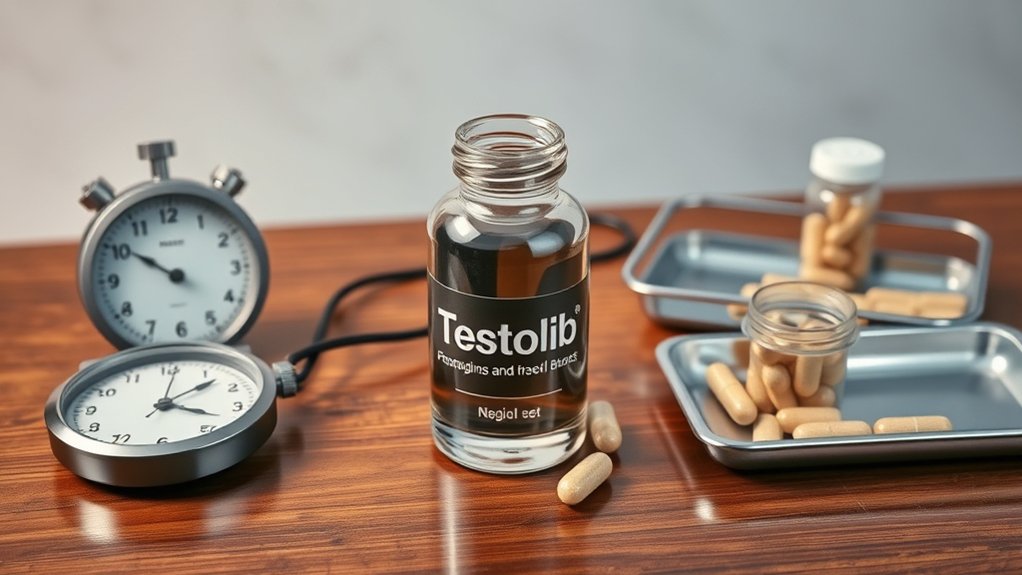
To get the most from Testolib, you want a dosage and timing plan that lines up with how resistance training drives anabolic signaling and how acute effects typically fade as fatigue and recovery processes ramp up. Aim for an ideal dosage that matches the product label, since ingredient dose-response curves determine when testosterone-supportive pathways meaningfully shift without overshooting. For Testolib timing, take it consistently around training—many people do best with pre-workout or shortly after, when nutrient partitioning and post-exercise insulin sensitivity are elevated. If your workouts are mornings, use it daily at the same time to reduce variability in exposure. How long to test? Give it 8–12 weeks, then reassess; adaptive changes in strength and recovery usually require multiple training cycles, not days.
Real-World Results: What Users Commonly Report
Curious about what users actually experience on Testolib? In effectiveness reviews, you’ll notice patterns that line up with the product’s mechanism: improved androgen signaling and downstream support for muscle protein synthesis. Across user experiences and user testimonials, feedback trends often center on strength gains, steadier training performance, and gradual changes in body composition rather than overnight transformations.
- You report more consistent lifting volume after 2–4 weeks, suggesting improved recovery and cellular energy utilization.
- You describe libido and workout drive changes, which fit the role of testosterone-supporting pathways.
- You track modest lean-mass increases and strength plateaus breaking, aligning with typical time-to-effect windows.
When you compare these feedback trends, most outcomes cluster around gradual, measurable progress you can confirm in training logs.
Potential Side Effects and Who Should Avoid Testolib
Even though many people report gradual strength and body-composition changes with Testolib, the same androgen-support mechanisms can also change how your body feels and functions—so it’s important to evaluate potential side effects and whether Testolib fits you. Many androgen-adjacent supplements can raise serum testosterone or alter androgen signaling, which may affect lipids, erythropoiesis, and fluid balance; you could notice acne, irritability, or increased sweating. If you have uncontrolled hypertension, sleep apnea, high hematocrit, or a history of prostate disorders, contraindications become more relevant because androgen effects can worsen risk profiles. Also avoid if you’re under 18, pregnant, or trying to conceive, since endocrine manipulation can disrupt development. If you take anticoagulants, corticosteroids, or have liver disease, check with a clinician first.
Testolib vs. Other Testosterone Boosters: What’s Different
When you compare Testolib to other testosterone boosters, the key difference is its ingredient set and how each compound is expected to affect androgen signaling—often by influencing LH/testicular Leydig activity, reducing androgen breakdown, or modulating upstream hormones. Look for ingredient-specific evidence (human data when available) and realistic timelines: most products can only produce modest, variable changes in total/free testosterone and symptoms, not consistent “dramatic” increases. If you track outcomes with pre/post bloodwork and standard dosing, you’ll be able to judge whether Testolib’s mechanism translates into benefits you can actually measure versus alternatives.
Key Ingredient Differentiators Explained
Testosterone boosters don’t differ because of marketing claims—they differ because of how their key ingredients interact with measurable biology: absorption, hormone synthesis pathways, and downstream androgen receptor signaling. With Testolib, you can focus on ingredient sourcing and whether each compound has mechanistic rationale tied to efficacy studies, not hype. Many “boosters” rely on underdosed blends or form factors that don’t reliably raise systemic levels. Here’s what to compare:
- Absorption mechanics: Look for delivery forms that improve bioavailability versus generic powders.
- Pathway targeting: Prioritize ingredients shown to influence relevant steroidogenic steps, not just “support.”
- Androgen signaling: Check evidence that compounds modulate androgen receptor activity or related biomarkers.
If the formulation lacks these links, your hormone response likely plateaus.
Compared Benefits And Expected Results
What you should expect from Testolib versus other testosterone boosters comes down to whether its ingredients are set up to change measurable physiology—systemic availability, hormone synthesis signaling, and downstream androgen receptor activity. In a testosterone comparison, Testolib tends to emphasize pathways linked to luteinizing hormone support and testicular steroidogenesis rather than relying solely on short-lived “libido” stimulants. If you respond, you’ll typically see changes in energy, training capacity, and recovery before noticeable shifts in serum markers—often within several weeks, depending on baseline deficiency and compliance. Versus weaker blends, you should expect more consistent dose-dependent effects and fewer placebo-driven swings. Keep in mind that user testimonials align with these mechanistic differences: steadier strength gains, fewer perceived “crashes,” and better post-workout performance.
Ingredient Quality Check: Evidence, Dosages, and Safety
Before you decide whether Testolib is worth your money, you should pressure-test its ingredient quality with three evidence checks: what the compounds are (and why they might work), what doses you’re actually getting versus doses used in human trials, and whether safety data exist at comparable exposures. Start with ingredient sourcing: look for identified raw materials, third-party testing, and clear labeling tied to published mechanisms. Next, verify dosages—capsule counts and mg-per-serving should match trial ranges, not just “proprietary blends.” Finally, demand safety standards: adverse-event reports, toxicology margins, and exclusion of banned substances.
- Confirm each active compound and mechanism (target pathway, not just claims).
- Compare labeled mg to human trial effective doses.
- Check safety standards at similar or higher exposures.
Budget Expectations: Cost Per Serving and Value
Once you’ve verified the compounds, doses, and safety at comparable exposures, the next step is figuring out whether Testolib’s pricing matches the amount of active ingredient you’re actually paying for. Start your cost comparison by calculating cost per serving from the label’s serving size and number of doses per container. Then translate that price into an “active ingredient per dollar” metric, using the stated mg per serving for each relevant compound. If the formula delivers higher bioactive dose per serving, you should expect lower cost per meaningful exposure, even if the sticker price looks higher. For budget considerations, also account for typical adherence length: a product that’s costlier but produces the same systemic androgenic signaling target per day can still be the better value.
Best Practices to Maximize Testolib’s Effectiveness
To maximize Testolib’s effectiveness, take your daily dosage consistently—adherence is what drives more stable blood levels and downstream hormone or metabolic signaling. Pair it with healthy lifestyle choices (regular sleep, resistance training, and a calorie-appropriate diet) since these behaviors improve insulin sensitivity and recovery pathways that can modulate the same mechanisms Testolib targets. If you miss doses or skip key habits, expect larger day-to-day variability in outcomes, even when the supplement is the same.
Follow Daily Dosage Consistently
Sticking to your Testolib daily dosage matters because consistent dosing helps maintain steadier androgen-related signaling, which is tied to downstream effects like improved nitrogen balance, training recovery, and (when appropriate) strength and lean-mass gains. If you chase missed doses, you create peaks/troughs that can blunt the predictability of hormone-mediated processes. Build a daily routine so consistent usage becomes automatic, and your body gets repeat exposure rather than irregular bursts.
- Take it at the same time each day to reduce variability in absorption and downstream signaling.
- Don’t “double up” after missed doses; resume the next scheduled dose to preserve steady exposure.
- Track adherence (app, checklist) so you can correlate results with consistent usage.
Pair With Healthy Lifestyle Choices
Pairing your Testolib daily routine with a healthy lifestyle helps you get more reliable outcomes because androgen-related signaling only translates into measurable results when recovery, substrate availability, and metabolic stress are managed. You’ll maximize effect by pairing it with targeted dietary adjustments that support protein synthesis and glycogen replenishment; aim for adequate calories, leucine-rich protein, and sufficient fats to maintain hormone substrate pools. Match that with exercise routines emphasizing progressive resistance plus short, controlled conditioning, since repeated high fatigue without recovery can blunt training adaptations and increase inflammatory markers. Prioritize sleep and manage stress to stabilize cortisol, which competes with anabolic pathways. Track body weight, performance, and strength changes weekly, then adjust calories and training volume if progress stalls.
Who Testolib May Be Right For (and Who It’s Not)
If you’re considering Testolib, it may make the most sense for people whose testosterone suppression is driven by modifiable factors—like disrupted sleep, excess body fat, or low baseline physical activity—because these conditions tend to reduce androgen signaling through well-characterized pathways (inflammation, altered endocrine rhythms, and changes in sex-hormone–binding dynamics). In a sense, your Target Audience overlaps with men whose User Demographics skew toward sedentary lifestyles and metabolic risk.
- Best fit: consistently poor sleep, higher BMI, and low training volume, since these shift LH/FSH output and increase SHBG in ways that blunt free testosterone.
- Not ideal: primary hypogonadism (e.g., testicular failure) or suspected genetic/structural causes—supplements won’t replace absent hormone production.
- Use caution: if you’re on testosterone therapy, have uncontrolled hypertension, or take interacting meds—review lab work first.
Common Questions
Is Testolib Fda-Approved or Regulated as a Prescription Medication?
Testolib isn’t FDA-approved as a prescription medication, and you won’t typically see it regulated like Rx drugs. Most versions of products like this fall under dietary supplement rules, meaning the FDA mainly enforces against unsafe or misbranded items rather than reviewing efficacy pre-market. That matters for Testolib safety: variable manufacturing, limited clinical data, and possible interactions can affect risk. Reported Testolib side effects may occur, but severity depends on ingredients and dosing.
Can I Take Testolib With TRT or Other Testosterone Treatments?
Yes, you can *sometimes* take Testolib alongside TRT, but you should only do it with clinician oversight. For Testolib interactions, TRT compatibility depends on its ingredients and your baseline testosterone regimen. Mechanistically, if Testolib acts as a hormone-support supplement, it may add marginal increases in androgen signaling, but it won’t replicate TRT’s pharmacokinetics. Watch for additive side effects (BP, lipids, estrogen/hematocrit). Ask for labs and adjust.
How Long Do Results Last After Stopping Testolib?
Results after stopping Testolib usually fade within weeks to a few months, because any androgen-supporting effects depend on ongoing ingredient exposure. If it didn’t markedly raise baseline testosterone through sustained suppression or stimulation, your hormones typically revert toward pre-use levels once stopping supplementation. The timeline varies by age, baseline status, dose, and duration. Concerning long term effects, most data suggest minimal lasting impact after cessation, with recovery to normal signaling.
Will Testolib Show up on Drug Tests or Affect Natural Testosterone Permanently?
Testolib isn’t proven to reliably trigger drug testing positives, but some products can contain undisclosed compounds, so it’s possible depending on your assay and what’s in the specific batch. For drug testing, you’ll want third-party certificates. On natural testosterone levels, short-term effects are typically temporary: exogenous androgen/testosterone boosters may suppress endogenous production via feedback, then recovery occurs after stopping, usually within weeks, assuming normal HPT axis function and no persistent suppression-inducing ingredients.
What’s the Best Time of Day to Take Testolib for Sleep?
Take Testolib earlier in the day for best sleep quality—ideally in the morning or early afternoon. If it nudges energy or alertness, taking it near bedtime could delay sleep onset, worsen sleep quality, and shift circadian timing. Mechanistically, align peak activity with daylight. Use the ideal dosage from the label or your clinician’s guidance, then track latency and awakenings for a week to confirm you’re not sleep-disrupted.
Overall
Testolib positions itself as a support supplement for Leydig cell function, which could—at least in theory—help raise testosterone levels and improve recovery, libido, and mood. That said, real-world results can vary widely, and you’ll want to be honest about the evidence and whether the included ingredients are dosed in a way that can meaningfully impact your hormones. If you decide to try it, do so with clear expectations and pay attention to your body’s response, especially for common side effects like acne, irritability, or any unwanted changes that could signal you’re not tolerating it well.
To get the best “signal,” don’t treat Testolib like a one-off experiment. Use it consistently for long enough to judge effects, track your outcomes (energy, libido, workouts, sleep quality, recovery), and support it with the basics—adequate sleep, progressive training, and a nutrient-dense diet. If you’re ready to take action and evaluate whether Testolib is right for your goals, start your plan today and make adjustments based on measurable results.