
If you’re dealing with a weak urine stream, frequent bathroom trips, or waking up at night to urinate, it’s easy to assume the cause is your prostate.
Products like Immortal Flow are specifically marketed to support prostate and urinary health, promising relief through plant-based ingredients.
But symptom patterns can come from many different factors—hydration habits, bladder irritation, medication side effects, infections, or benign prostate enlargement—so it’s smart to look beyond the label and evaluate how convincing the evidence is.
In this article, we’ll explore what Immortal Flow is claiming for urinary support, including the roles of its key ingredients like saw palmetto and pumpkin seed extract, and whether their anti-inflammatory reputation is likely to translate into real-world benefits.
We’ll also consider what matters just as much as ingredient lists: safety, transparency, and when it’s time to talk to a clinician instead of self-treating.
Great Points
- Immortal Flow targets mild lower urinary tract symptoms, such as weak stream, hesitancy, nocturia, and incomplete emptying.
- Key ingredients like saw palmetto and pumpkin seed extract may help via anti-inflammatory and antioxidant pathways, with modest expected benefits.
- Evidence quality is limited, so results—if any—typically appear within 2–4 weeks and become clearer by 6–12 weeks.
- It may be unsafe or less useful if you’re on anticoagulants, hormone-sensitive meds, or prostate urinary prescriptions.
- Worsening flow, pain, retention, fever, or blood in urine warrants prompt medical evaluation, not supplement use.
What Immortal Flow Claims for Prostate and Urination
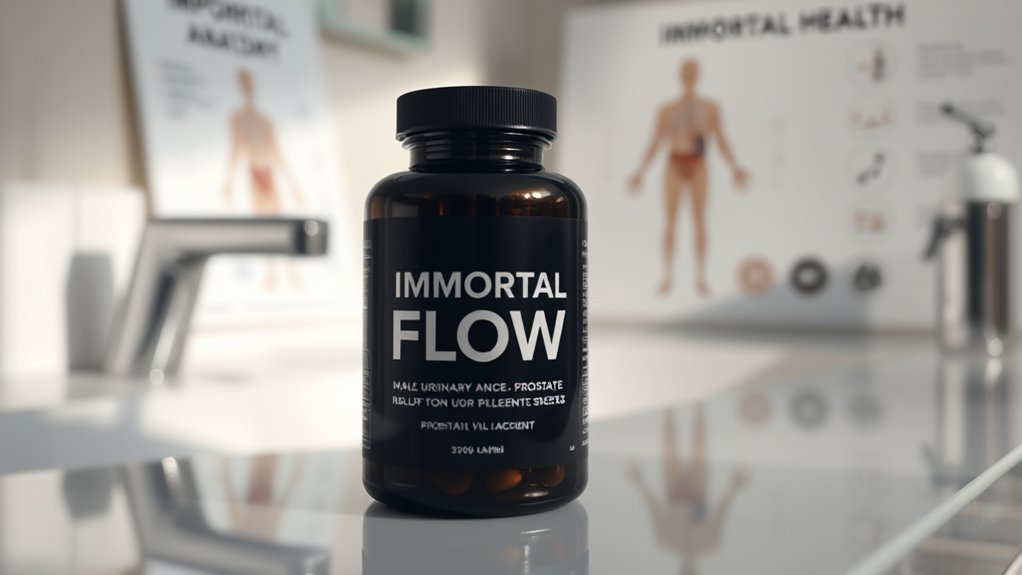
Immortal Flow markets itself as a prostate and urinary support product, claiming it can help address common lower urinary tract symptoms—like a weak urine stream, hesitancy, nighttime urination, and a sensation of incomplete emptying. As you read these claims, you should separate symptom descriptions from proven mechanisms. The product’s messaging can echo prostate myths and urinary misconceptions, such as implying that supplement use alone can “shrink” obstruction or replace clinical evaluation for benign prostatic hyperplasia. Evidence-based care considers symptom scores, urinalysis, prostate assessment, and risk of complications; no supplement should be treated as a diagnostic or curative substitute. You’ll want to ask whether the company provides measurable endpoints, clinically relevant data, and clear safety information for your specific urinary pattern.
Key Ingredients in Immortal Flow and Their Link to Prostate Health
You’ll usually find saw palmetto in prostate-focused formulas, and clinical evidence suggests modest improvements in lower urinary tract symptom scores, potentially via anti-inflammatory and anti-androgenic activity on DHT pathways. Pumpkin seed extract is often included for urinary support; available data are limited but indicate possible effects on bladder comfort and nocturia through antioxidant compounds and micronutrients. If you’re considering Immortal Flow, it’s important to weigh these ingredient-specific mechanisms against your symptom pattern and any meds you take, and to discuss it with your clinician—especially if you have worsening retention or elevated PSA.
Saw Palmetto For Prostate Support
Saw palmetto is a commonly used botanical ingredient for prostate support, and it’s often included in supplements like Immortal Flow because its extracts may help address benign prostatic hyperplasia (BPH)-related symptoms. When you’re evaluating saw palmetto benefits, focus on evidence suggesting modest improvements in lower urinary tract symptoms by inhibiting pathways involved in inflammation and androgen signaling. Clinical studies vary, but most standardized extracts target a lipophilic fraction.
Here’s how it’s commonly positioned:
| Component | Potential action | Evidence level |
|---|---|---|
| Fatty acid extracts | anti-inflammatory | moderate |
| Sterols | androgen modulation | limited |
| Standardized fruit extract | symptom improvement | moderate |
For saw palmetto dosage, many trials use 160 mg/day (often split). If you use anticoagulants or hormone-sensitive meds, talk with your clinician first.
Pumpkin Seed Extract For Urination
Pumpkin seed extract is a frequent “urination support” ingredient in prostate-focused formulas, and it may help by targeting both urinary tract comfort and prostate-related inflammation. If you’re dealing with LUTS, you may find pumpkin benefits relevant because standardized seed extracts contain phytosterols and tocopherols that can modulate inflammatory signaling and smooth-muscle tone. Small clinical trials suggest improvements in IPSS symptoms, including weak stream and nocturia, aligning with urinary improvement goals. Technically, the evidence supports antioxidant activity and possible effects on 5-alpha-reductase–related pathways, though findings aren’t uniform across studies. In practice, you should look for standardized extracts (dose and marker listed) and track symptom changes over 4–8 weeks. Avoid if you have allergy to seeds, and discuss meds with your clinician.
Does Immortal Flow Support Urinary Flow and Comfort?
You may notice improved urinary flow and less discomfort during urination, which is often consistent with prostate and lower urinary tract support approaches. When evaluating Immortal Flow, look for evidence that its ingredients can reduce functional resistance and support smoother voiding, rather than relying on symptom-only claims. If you’ve had weak stream, hesitancy, or burning, track changes in flow quality and pain over time and discuss persistent or worsening symptoms with a clinician.
Eases Urinary Flow
Immortal Flow is marketed as a urinary-flow support supplement, and the question is whether it can genuinely improve urinary flow and day-to-day comfort. For urinary wellness, you want evidence that any ingredient can influence lower urinary tract function—often via effects on smooth-muscle tone, inflammation, or urine dynamics. In practice, you should look for clinical outcomes tied to flow improvement: symptom score changes alongside objective measures like Qmax or flow rate.
- Track baseline flow (mL/s) and frequency to see if changes are real.
- Expect modest effects if ingredients target androgen signaling or inflammation pathways.
- Use consistent dosing and report any worsening, since urinary retention risk matters.
Enhances Comfort During Urination
If urinary comfort is your main goal, it matters whether Immortal Flow can meaningfully reduce “straining,” burning, or incomplete-emptying sensations alongside any measurable change in urinary flow. For urination comfort, focus on symptom domains tied to lower urinary tract function: reduced dysuria, improved perceived emptying, and smoother stream initiation. In prostate wellness, discomfort is often mediated by inflammation, smooth-muscle tone, and bladder outlet obstruction dynamics; evidence-based supplements should plausibly target these pathways while maintaining safety. You should expect clinical confirmation via validated questionnaires (e.g., IPSS), objective post-void residual measures, and repeatable flow metrics. If trials only show modest flow shifts without corresponding symptom relief, comfort benefits may be limited. Track baseline scores for 2–4 weeks, then reassess. Consult a clinician if burning, fever, or pain develops.
How Bladder Health May Be Affected by Immortal Flow
Bladder health can be influenced by how Immortal Flow affects hydration status, bladder pressure dynamics, and urinary biomarkers, and these effects may vary based on dose, timing, and your baseline urinary function. If you increase fluid or alter urine composition, your bladder function may shift toward more frequent but lower-volume voids, which can meaningfully change urinary habits. Monitor symptoms like urgency, nocturia, and weak stream onset, since changes in urine osmolality and pH can influence irritation and flow resistance. Evidence suggests supplements may indirectly affect voiding by modulating thirst, diuresis, and inflammatory signaling, though responses are individualized. Track your hydration and timing to reduce confounding.
- Hydration-driven changes in urine volume and bladder pressure
- Biomarker shifts (pH/osmolality) linked to irritation risk
- Symptom patterns that reflect your baseline bladder function
Who Immortal Flow Is Best For (and Who Should Skip It)
If you have mild lower urinary tract symptoms tied to prostate enlargement, Immortal Flow may be most helpful for short-term relief of urinary irregularities, though evidence quality is limited and effects can vary. You should skip it (or get clinician input first) if you’re already using prescription urinary or prostate medications, because interactions and additive effects aren’t well characterized. If you’re noticing worsening flow, pain, retention, or recurrent infections, don’t self-manage—talk to your clinician promptly.
Best For Prostate Symptoms
Immortal Flow may be a good fit for men who deal with bothersome lower urinary tract symptoms—like weak stream, frequent urination, nocturia, or straining—when those symptoms are consistent with benign causes (e.g., BPH) rather than an emergency or infection. If your prostate health and urinary function concerns track with obstructive patterns, this supplement may align with symptom-focused goals, especially as adjunctive support to standard care. That said, it’s not a replacement for urologic evaluation, PSA workup, or imaging when indicated.
- Persistent BPH-type LUTS with gradual onset
- No fever, burning, or acute retention
- Stable baseline meds for urinary function to avoid confounding
Helps Mild Urinary Irregularities
For mild urinary irregularities—think occasional weak stream, mild frequency, or getting up a bit more at night—Immortal Flow may be best suited to men whose symptoms look consistent with early, non-urgent lower urinary tract changes (often associated with BPH) rather than an acute infection or emergency. If you’re dealing with fluctuating bother scores and no fever, pain, or sudden retention, you can consider it as an adjunct while you monitor symptom trends. The rationale is that certain herbal remedies may support urinary function and pelvic smooth-muscle tone, but benefits tend to be modest and gradual. Pairing it with lifestyle changes—fluid timing, limiting evening alcohol/caffeine, weight management, and timed voiding—improves objective measures like nocturia episodes and flow consistency. If symptoms persist, you should seek evaluation.
Skip If Using Medications
Because Immortal Flow is an over-the-counter herbal supplement, it may not be appropriate to use alongside certain medications for urinary symptoms, especially if you’re already getting adequate control. If you take Prostate medications (like 5-alpha-reductase inhibitors or alpha blockers) or Urinary medications (such as antimuscarinics or beta-3 agonists), adding another agent can complicate assessment of efficacy and side effects. Evidence-based practice focuses on minimizing polypharmacy and monitoring adverse events. Consider skipping unless your clinician confirms compatibility and you have persistent symptoms despite current treatment.
- You’re stable on Prostate medications with minimal bothersome urinary symptoms.
- You have overlapping side effects (dizziness, dry mouth, urinary retention) that could be amplified.
- You need drug interactions or safety guidance from a pharmacist or prescriber.
Expected Results Timeline for Prostate and Urinary Support
Most people who use Immortal Flow for prostate and urinary support notice early changes within the first few weeks, with clearer symptom trends typically becoming measurable by 6–12 weeks. In practice, your expected results depend on baseline severity, adherence, and individual variability. You may see gradual improvement in lower urinary tract symptoms such as weaker stream, hesitancy, nocturia, or incomplete emptying, as supportive mechanisms may influence inflammation-related pathways and urinary flow dynamics. By 2–4 weeks, some report modest reductions in urgency/frequency, though objective metrics can lag behind perceived relief. If no meaningful change occurs by 12 weeks, it’s reasonable to reassess contributing factors with your clinician. Tracking symptoms and validated questionnaires helps interpret response.
How to Take Immortal Flow Safely and Consistently
Once you’ve set expectations for when symptoms might start improving, the next step is using Immortal Flow in a way that’s safe and consistent enough for those changes to be interpretable. You’ll want a regimen that fits your physiology and your assessment window, not trial-and-error dosing. Follow established dosage recommendations on the label or your clinician’s plan, and keep the timing steady (e.g., same morning window daily) to reduce variability in symptom tracking and urine parameters.
- Take it with water, maintain consistent timing, and avoid skipping doses unless instructed.
- Document dose, day, hydration, and urinary/prostate symptoms to link effects with your timeline.
- Review potential interactions: check all medications/supplements with your pharmacist, and pause only under guidance.
What to Watch Out for: Side Effects and Interactions
While Immortal Flow is generally intended to be used as directed, you should still monitor for side effects and interaction risks so you can distinguish expected changes from potential harm. In clinical nutrition and supplement use, GI upset (nausea, diarrhea, cramping) is the most common transient issue, especially if you take it with food inconsistently. Pay attention to urinary burning, worsening frequency, or new pain—these aren’t typical “adjustment” effects and warrant medical review. Because many formulas include botanicals or concentrated nutrients, interaction risks may rise with anticoagulants/antiplatelets, antihypertensives, diabetes meds, or hormone-sensitive therapies. If you use prescription drugs, check each ingredient against standard interaction references and avoid starting multiple new supplements at once. Stop and seek care for rash, swelling, shortness of breath, or blood in urine.
Immortal Flow vs Alternatives for Urinary and Prostate Care
If you’re comparing Immortal Flow to other urinary or prostate-support options, start by matching the ingredient profile to the specific symptom pattern you’re trying to improve—lower urinary tract symptoms (like weak stream or urgency), nocturia, bladder discomfort, or general prostate health. You should weigh Immortal Flow against herbal alternatives (e.g., saw palmetto, beta-sitosterol), standard nutraceutical blends, and prescription-focused approaches, noting differences in dosing and studied outcomes. Complement any supplement with lifestyle changes: timed voiding, fluid management, pelvic floor exercises, and reduced irritants (caffeine, alcohol). Clinically, most OTC strategies aim to modulate inflammation, androgen-related pathways, or smooth muscle tone, but effect sizes are variable and symptom-specific.
- Compare target symptoms and study endpoints
- Screen for additive risks with meds
- Implement lifestyle changes alongside supplements
Is Immortal Flow Backed by Strong Evidence or Hype?
Immortal Flow is marketed as a urinary and prostate-support supplement, but the key question is whether its ingredients have strong, symptom-relevant clinical evidence beyond general “prostate wellness” claims. In your evidence analysis, you should separate mechanism plausibility from outcomes: LUTS/urinary flow, nocturia, PSA-related endpoints, and adverse events. Then do hype evaluation by checking whether trials are human, adequately powered, and directly tied to the product’s exact formula and doses—many supplements rely on separate ingredient studies or non-urologic surrogate markers.
| Claim type | What you’d want | Common gap |
|---|---|---|
| Urinary flow | RCTs, symptom scales | No symptom endpoints |
| Nocturia | Blinded comparisons | Short follow-up |
| PSA/biomarkers | Baseline-matched analysis | Unlinked outcomes |
| Safety | AE reporting, dose | Incomplete reporting |
| Formulation | Same doses as label | Proprietary blends |
How to Check the Label Quality and Ingredient Transparency
- Confirm serving size matches dosing directions and compare mg to any clinical studies cited.
- Check for proprietary blends, vague “proprietary extract” wording, and missing ingredient concentrations.
- Verify batch/lot coding, expiration, and whether results are reproducible.
When to See a Doctor Instead of Relying on Supplements
Even when a supplement claims to support “circulation” or “longevity,” you should treat it as an add-on—not a substitute for medical care—especially when your symptoms suggest an underlying condition that needs diagnosis or monitoring. Don’t self-treat if you have severe urinary retention, fever, flank pain, burning with systemic illness, or blood in urine; these require prompt symptom assessment and medical evaluation. Seek urgent care for acute worsening, new neurologic symptoms, or inability to urinate. If you have chronic weak stream, nighttime urination, or persistent pelvic discomfort, get evaluated rather than escalating supplements, since causes may include benign prostatic hyperplasia, prostatitis, infection, or malignancy. Track intake, but ask your clinician about PSA, urinalysis, cultures, and post-void residual testing.
Common Questions
Is Immortal Flow Safe for Men With Enlarged Prostate or BPH Medications?
Immortal Flow is likely not well-studied specifically for men with BPH on medications, so you should treat it as unproven. If you’re taking alpha-blockers or 5-alpha-reductase inhibitors, ask your urologist first and check for ingredient interactions. Evidence for prostate health supplements is mixed, and effects vary. For safer BPH treatment options, rely on guideline-based therapies, monitor urinary symptoms, and use supplements only as adjuncts.
How Long Does Immortal Flow Take to Affect Night-Time Urination?
You’ll usually notice nighttime relief within 1–2 weeks if Immortal Flow is going to help, though individual responses vary based on prostate function, symptom severity, and adherence. Evidence for supplements is limited, so improvements are often gradual rather than immediate. You may see milder thirst and urgency sooner, but sustained reductions in nocturia typically require consistent daily use for at least 14–30 days. If symptoms worsen, you should consult your clinician.
Does Immortal Flow Support Urinary Symptoms Without Changing PSA Levels?
Yes—Immortal Flow may help relieve urinary symptoms for some men without meaningfully changing PSA levels, but results vary. You should view this as adjunct support, not a PSA substitute; PSA reflects prostate biology, so any supplement claim of “no PSA change” needs clinical evidence. Technically, you’re aiming to reduce LUTS via hydration, antioxidant, or anti-inflammatory pathways while monitoring PSA with your clinician and reassessing if symptoms persist—like a “thermostat” adjusting comfort, not identity.
Can I Take Immortal Flow Alongside Saw Palmetto or Other Supplements?
Yes, you can usually take Immortal Flow alongside saw palmetto, but you should check potential supplement interactions and herbal combinations. Evidence for safety of combined prostate supplements is limited, and overlapping ingredients (e.g., anti-inflammatory, lipid-modulating or diuretic-like effects) could alter effects or side effects. Talk to your clinician if you use anticoagulants, hormone therapy, or have bleeding risk, kidney disease, or planned surgery. Start one change at a time. Monitor symptoms and PSA.
Is Immortal Flow Suitable for People With Kidney Disease or on Diuretics?
Yes, you should be cautious—there isn’t strong clinical evidence on Immortal Flow safety in people with kidney disease. If you have reduced kidney function or are taking diuretics, you could face diuretic interactions and risk electrolyte or fluid imbalances. Check with your clinician, review the product label for mineral/herbal doses, and consider baseline labs (creatinine/eGFR, electrolytes). Stop and seek care if you notice swelling, dizziness, or reduced urination.
Overall
If you’re considering Immortal Flow, think of it as a potential way to support everyday urinary comfort—but not as a replacement for proper medical care. While some men may notice modest benefits, the evidence for prostate and urinary support is still limited, and results can vary widely. Before you try it, review the Supplement Facts label, confirm the dosing matches your needs, and be mindful of any ingredients that could interact with current medications or health conditions.
Take action the smart way: if you have ongoing urinary discomfort, weak stream, painful urination, blood in your urine, fever, or symptoms that are rapidly worsening, don’t “wait it out”—contact a qualified clinician for an evidence-based evaluation. If you’re not sure whether Immortal Flow is appropriate for you, consider asking a healthcare professional first, then use the product responsibly and monitor how you feel.
4 thoughts on “Immortal Flow Review: Does It Support Prostate and Urinary Health?”