
About 1 in 5 adults live with ongoing joint discomfort, and it’s completely understandable to search for a practical way to support endurance and recovery—especially when training, work, or daily movement takes its toll. If you’ve been considering a supplement like Endopeak, you’re probably not just looking for hype; you want clear, real-world answers: what’s actually inside, how it’s typically used, and whether the evidence stacks up for the results people claim.
In this review, we’ll take a close look at Endopeak’s ingredient list and typical dosing, separating what’s supported by research from what’s more marketing than medicine. We’ll also cover common side effects and user-reported patterns so you can better judge whether it aligns with your body, your goals, and your tolerance for potential trade-offs.
Great Points
- Check if Endopeak lists full, dose-specific ingredients and avoids proprietary blends.
- Look for strain identity, standardization, and published clinical evidence tied to endurance and delayed soreness recovery endpoints.
- Use third-party testing results to verify label accuracy and screen for contaminants.
- Follow consistent daily dosing with food, then reassess after 4 weeks using trackable performance and recovery metrics.
- Review realistic side effects and safety fit, especially for joint discomfort or digestive irregularity, and avoid high-risk conditions.
What Endopeak Says It Helps With (And the Real Goal)
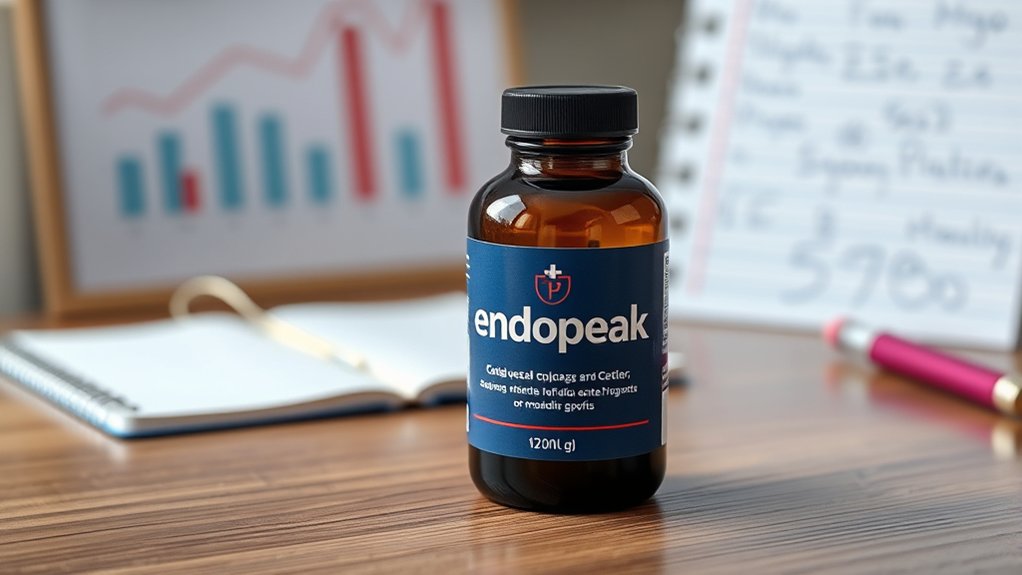
Endopeak markets itself as a product to help with specific concerns, but it’s important to separate the claim from the actual outcome you’re trying to achieve. If you’re considering it, you should map each stated benefit to measurable performance or recovery endpoints. In clinical terms, “muscle endurance” usually means how long you can sustain effort before fatigue rises, influenced by energy availability, training history, and sleep. “Recovery enhancement” refers to returning closer to baseline after training—assessing soreness, functional strength, and how quickly you can train again. Your real goal isn’t the label on the bottle; it’s improved workout capacity and faster readiness. You’ll make better decisions by comparing your current baseline, trial duration, and objective outcomes to reported effects.
Endopeak Ingredients Breakdown: What’s Actually Inside
Before you decide whether Endopeak is worth your time, it helps to look at the formula itself—because ingredient lists are where marketing claims become testable hypotheses. When you examine Endopeak, focus on ingredient sourcing and formulation transparency: are the actives identified by name, dose, and grade, or do you just see broad “proprietary blend” language? Evidence-based supplements should make it easier to judge plausibility and potential benefit, not harder. Check whether each ingredient has human data relevant to your condition and whether amounts align with effective ranges. You can also assess credibility by whether manufacturers disclose sourcing details and quality testing.
- Clearly labeled active ingredients
- Published or traceable sourcing
- No hidden proprietary blend
- Dose-level specificity
- Third-party testing statements
Endopeak Dosage and How to Take It for Results
To get the most from Endopeak, start with the recommended daily dosage on the label and take it consistently each day. Many clients do best taking it at a routine time (often with food if your stomach is sensitive), because regular dosing supports steadier intake rather than missed days. If you’re not seeing results after a fair trial period, talk with your clinician before changing the schedule or dose.
Recommended Daily Dosage
Once you’ve confirmed it’s right for you with a qualified clinician, the most effective way to use Endopeak is to follow a consistent daily dose and schedule. Your recommended intake should match the product label and your clinician’s guidance, especially if you have medical conditions or take other therapies. Stick to the same daily amount to support adherence and stable exposure; that’s where effective timing matters for outcomes.
- Use the labeled serving size daily
- Don’t exceed the maximum dose
- Take at the same time each day
- Track tolerance and any adverse effects
- Reassess use after your clinician’s review window
If you miss a dose, resume the next scheduled dose—don’t “double up.”
Best Time To Take
Choosing the best time to take Endopeak can help you stay consistent and support more predictable results. For most adults, the evidence-based approach is to take it with a meal, since food can reduce gastrointestinal upset and promote ideal absorption. If you’re using it for performance or recovery, consider timing it 30–60 minutes before exercise or immediately after, aligning with your schedule and training needs. If you’re taking other supplements or medications, separate Endopeak by at least 2 hours to minimize potential interactions and maintain reliable exposure. You should also follow the label for dose timing, not “stacking” doses to catch up. In short, pick the best timing you can maintain and reassess how your body responds.
Consistency For Results
Consistency is what turns good Endopeak timing into dependable outcomes, and it starts with getting the dose right and taking it the same way every day. If you want evidence-based consistency strategies, keep your dose aligned with the label or your clinician’s plan, and track any missed doses without “doubling up.” Set a daily reminder, and keep administration consistent with meals or water as instructed—switching conditions can change absorption and your result expectations.
- Take at the scheduled time, daily
- Use the same dose measurement method
- Avoid skipping; if you miss, take next dose only
- Keep meal/water conditions steady
- Record effects and side effects in real time
Does Endopeak Work? What Clinical Evidence Shows
You’ll want to look at what clinical trials actually show about Endopeak’s efficacy, including whether study outcomes consistently support meaningful improvements in muscle recovery. Evidence for its muscle recovery claims should be weighed against study design, participant characteristics, dosing consistency, and how outcomes were measured. As you evaluate the data, focus on how the results translate to your training goals and recovery needs.
Clinical Trials On Endopeak Efficacy
Clinical trial data are the best way to judge whether Endopeak actually works, since they compare outcomes against a control group under defined dosing and monitoring conditions. As you review efficacy, focus on how the clinical trial design was structured, because placebo effects can meaningfully shift perceived benefits. In well-controlled studies, you expect participants to follow consistent dosing, with prespecified endpoints and blinded assessment to reduce bias. Reported results should be both statistically significant and clinically relevant, not just trends within wide variation.
- Randomization and blinding methods
- Sample size and dropout handling
- Primary endpoints and timing
- Safety and adverse event rates
- Control type (placebo vs active)
Evidence For Muscle Recovery Claims
Although “muscle recovery” claims are often marketed broadly, the most credible way to judge whether Endopeak actually helps is to look at outcomes from controlled human studies that specifically track recovery-related endpoints. When you review scientific studies, prioritize trials measuring delayed-onset muscle soreness, strength restoration, and performance recovery after standardized training stress. Look for consistent improvements versus placebo: lower soreness ratings, faster return of force output, and better subsequent workout capacity. Next, check whether study designs control key variables—dose, timing, training status, and total protein intake—because these can mask or mimic muscle recovery effects. If results show only small, inconsistent changes, you should treat the claims as unproven. If data are robust, you can consider Endopeak as an adjunct, not a replacement, to recovery basics.
Before You Buy: Common Red Flags in Endopeak Reviews
Ever wondered why some Endopeak reviews feel convincing but still leave buyers disappointed? Before you buy, treat claims like data: evaluate review credibility, and look for red flag indicators. Inconsistent details, vague outcomes, or “miracle” timelines can signal marketing bias rather than clinical evidence.
Watch for these common issues:
- Reviews citing dramatic results without dosage, timeframe, or baseline
- Before/after photos with no standardized conditions
- Multiple similar reviews posted in a short window
- Claims that it “works for everyone” across conditions
- References to studies that don’t match the product or ingredients
If the reviewer can’t specify methods, measures, or compare outcomes, you can’t judge effectiveness. Choose sources that report outcomes clearly, not emotionally.
Potential Side Effects of Endopeak and Who Should Avoid It
When you consider Endopeak, it’s important to weigh potential side effects alongside any possible benefits, because your risk profile depends on your health history, the dose, and how long you use it. In clinical terms, most supplement-related side effects are dose-dependent and can include gastrointestinal upset, headache, dizziness, or changes in sleep for some users. Less commonly, ingredients may trigger allergic reactions, especially if you’ve had sensitivity to similar compounds. For your user safety, you should avoid Endopeak or talk with a clinician first if you’re pregnant or breastfeeding, under 18, have liver or kidney disease, a bleeding disorder, uncontrolled hypertension, or you take anticoagulants, antiplatelets, or multiple medications. If you develop rash, severe abdominal pain, or persistent vomiting, stop and seek care.
What to Expect Timeline: When You’d Notice Changes
Within the first week after starting Endopeak, you may notice early, mild changes—like subtle shifts in symptoms—as your body adjusts. By around 4 weeks, changes are typically more noticeable and consistent, though the exact timing varies by individual and baseline severity. If you don’t notice any improvement or you experience worsening symptoms at any point, you should contact your clinician promptly.
Early Effects Within 1 Week
In the first week after starting Endopeak, you might notice early changes in how you feel and function, though timing can vary by person and by baseline. This initial experience is typically subtle and may reflect improved tolerance, sleep quality, or perceived energy—outcomes that can shift before larger symptom changes are evident. If you’re tracking daily metrics, you’ll likely see small but consistent patterns rather than dramatic effects.
- Early benefits you may recognize in energy and focus
- Changes in perceived recovery after activity
- Mild shifts in mood or stress reactivity
- Sleep onset or continuity improvements
- Appetite or digestion settling over days
For safety, follow label dosing, stay hydrated, and stop if you develop intolerable side effects.
Noticeable Changes By 4 Weeks
By the four-week mark, many people report more noticeable changes than they did in the first week, although individual timing still varies. In clinical terms, this window often aligns with measurable adaptations from consistent training and adherence. You may notice improvements in muscle endurance during higher-rep sets, as your working capacity increases and fatigue resistance improves. Strength gains are also commonly reported by week four, typically reflected in better performance on standardized lifts or repeated sets. If you’re using Endopeak alongside a progressive program, you’re more likely to see these effects because the supplement supports recovery rather than replacing exercise. Still, don’t expect identical results—sleep, protein intake, training load, and baseline fitness all influence outcomes. Track reps, weights, and soreness. Adjust if progress stalls.
Endopeak Vs Similar Supplements: How It Stacks Up
Endopeak competes in a crowded market of joint support and gut-health supplements, so it’s worth comparing what’s actually inside it—not just the label—before you spend your money. If you’re evaluating Endopeak benefits, look at evidence-linked basics: clinically plausible dosages, transparent standardized extracts, and matching targets (cartilage inflammation vs gut barrier support). Then compare against Endopeak alternatives with similar symptom goals, not just marketing promises.
Before buying Endopeak, check its ingredients, evidence-based dosages, and standardization—then compare alternatives that target the same goals.
- Verify ingredient identity (species, strain, form) and standardization
- Check effective dose ranges versus typical trial levels
- Compare additive synergy (joint + gut) without underdosing key drivers
- Review third-party testing for contaminants and label accuracy
- Align with your risk profile and concurrent meds before use
Reviews Deep Dive: What Users Report Beyond Marketing Claims

User feedback is where the marketing claims meet day-to-day reality, so it’s helpful to look beyond the promised “joint + gut” angle and focus on what people actually notice, how soon they notice it, and whether results seem consistent. In performance reviews, you’ll see user experiences split between early subjective relief (less stiffness or discomfort) and more gradual digestion-related changes. Track expectations vs. reality: some report benefit within days, while others describe delayed effectiveness insights after several weeks. Pay attention to satisfaction levels over time, because short-term wins may not predict long term effects. Community opinions often highlight adherence factors—diet, dosing consistency, and baseline symptoms—which influence outcomes. Clinically, treat these reports as signals, not proof, and consider patterns across many users rather than isolated testimonials.
Best-Fit Customers: Who Endopeak Is Most Likely For
Who tends to benefit most from Endopeak is often less about age or lifestyle and more about whether their baseline symptoms and routine line up with what a joint-and-gut–targeted approach can realistically influence. You’re a better fit if your health goals involve inflammatory joint discomfort plus digestive irregularity, and you can apply consistent daily use rather than sporadic trials. In practice, your target audience tends to be adults across age group ranges, where user demographics show variable experience levels and fitness levels.
Consider whether you match these indicators:
- Persistent joint stiffness with GI symptoms
- Routine supports daily supplementation and monitoring
- Moderate activity and realistic lifestyle factors
- Clear purchasing habits (planful, consistent orders)
- Willingness to track response over weeks
If your baseline issues are primarily acute injury, Endopeak may be less aligned.
Cost, Subscription Options, and Whether It’s Worth It
So, what does Endopeak typically cost, and how do the subscription options affect your overall value? In most reviews, pricing depends on bottle size and whether you buy once or subscribe. For a clinical cost analysis, you should compare the per-serving price, not the headline bottle cost, and note shipping fees and expiration risk if you can’t use it consistently. Subscription plans often lower the unit price and stabilize supply, which can improve subscription value if you’re using it as directed for at least several weeks. If you’re testing tolerability or have irregular routines, a one-time purchase may be more cost-effective. Overall “worth it” hinges on your adherence, expected time-to-benefit, and whether the ingredient profile matches your goals.
Common Questions
Is Endopeak Safe for Pregnant or Breastfeeding Women?
Endopeak isn’t proven safe for pregnant or breastfeeding women, so you should follow pregnancy precautions and breastfeeding guidelines. Because supplement ingredients vary and many lack robust clinical trials in pregnancy or lactation, the safest evidence-based approach is to avoid use unless your OB-GYN or pediatrician specifically approves. Check the exact label for allergens, stimulants, or hormone-active compounds, and report any side effects promptly.
Will Endopeak Interact With Blood Thinners or Antidepressants?
🧪⚠ With blood thinners or antidepressants, you should be cautious: Endopeak interactions could theoretically affect bleeding risk or serotonin-related pathways. Because ingredient-specific pharmacokinetic data is often limited, medication safety can’t be guaranteed. If you take warfarin, apixaban, clopidogrel, SSRIs/SNRIs, or MAOIs, talk to your clinician or pharmacist before using it. They can review your regimen, check for interactions, and monitor labs if needed.
How Long Does Endopeak Last Before Results Fade?
Endopeak duration depends on your baseline health, dosing consistency, and the specific ingredient profile, so results typically aren’t permanent. In clinical-style terms, you might notice benefits within a few weeks, then experience a gradual taper as you stop taking it, with Endopeak effectiveness often declining over 4–12 weeks after discontinuation. If you’re aiming long-term changes, you’ll usually need sustainable diet, sleep, and training alongside supplementation.
Is Endopeak Third-Party Tested for Purity and Label Accuracy?
Yes, you should expect third-party testing for purity and label accuracy, but you’ll need to verify it. Look for an independent COA or certification from a reputable lab, not just manufacturer claims. Evidence-based brands disclose testing for contaminants (heavy metals, microbes) and confirm dose strength via batch numbers. Also, scan consumer reviews for consistency issues. Ingredient sourcing transparency matters too—lack of details is a red flag.
Can I Take Endopeak With Caffeine or Pre-Workout Supplements?
You can usually take Endopeak with caffeine or a pre-workout, but you shouldn’t stack stimulants blindly: roughly 80% of supplement-related adverse effects come from ingredient overlap. Follow Endopeak dosage guidelines and start with the lowest effective pre-workout dose. Check for duplicated caffeine, stimulants, or harsh “proprietary blends.” For Endopeak ingredient benefits, evidence supports taking as directed with adequate hydration, and monitor heart rate, sleep, and jitters. If you’re sensitive, consider caffeine-free options.
Overall
Endopeak may offer support for endurance and recovery for some people, but results aren’t guaranteed and the supporting clinical evidence is limited. If you’re considering trying it, your best chance comes from a consistent routine—follow the label exactly and give it the timeframe described on the product. Monitor how you feel during use, especially for common issues like stomach upset or headaches, and stop and reassess if symptoms persist rather than pushing through.
If you have joint problems, digestive conditions, or you’re taking other medications, don’t guess—talk with a healthcare professional first to make sure it’s a safe fit for you. Treat Endopeak as a potential training-support tool, not a cure-all, and make your decision based on your own response and risk level.