
If you’ve been searching for a legit way to boost testosterone-related results—like stronger libido, more energy, and better workout recovery—chances are you’ve come across Alphaline TRT Capsules.
The pitch is tempting: “natural TRT” support that supposedly helps your body perform like you’re optimizing hormones without the drawbacks of traditional therapy.
But before you spend your money, it’s important to ask a harder question: does the science actually back those claims, or is it mostly marketing built on vague “hormone support” language and indirect biological reasoning?
In this article, we’ll break down what Alphaline TRT Capsules are really promising and what that means in practice.
You’ll learn how the product claims stack up against real human evidence (not just preclinical findings), what to look for in the ingredient list and dosing, and why supplement quality, variability, and potential side effects matter—especially if you’re taking other medications or have underlying health conditions.
Great Points
- Check whether Alphaline TRT has a clear Supplement Facts panel with standardized dosages, not vague proprietary blends.
- Review evidence quality: look for human trials measuring blood testosterone, not only libido/energy questionnaires.
- Be cautious with “natural TRT” claims; many products indirectly support hormones and may not raise serum testosterone.
- Assess safety risks like lipid changes, mood effects, androgenic activity, and liver concerns from specific high-risk ingredients.
- Verify purchasing legitimacy and quality control, including third-party testing, lot codes, and proper storage/shipping to prevent potency loss.
What Alphaline TRT Capsules Claim to Do
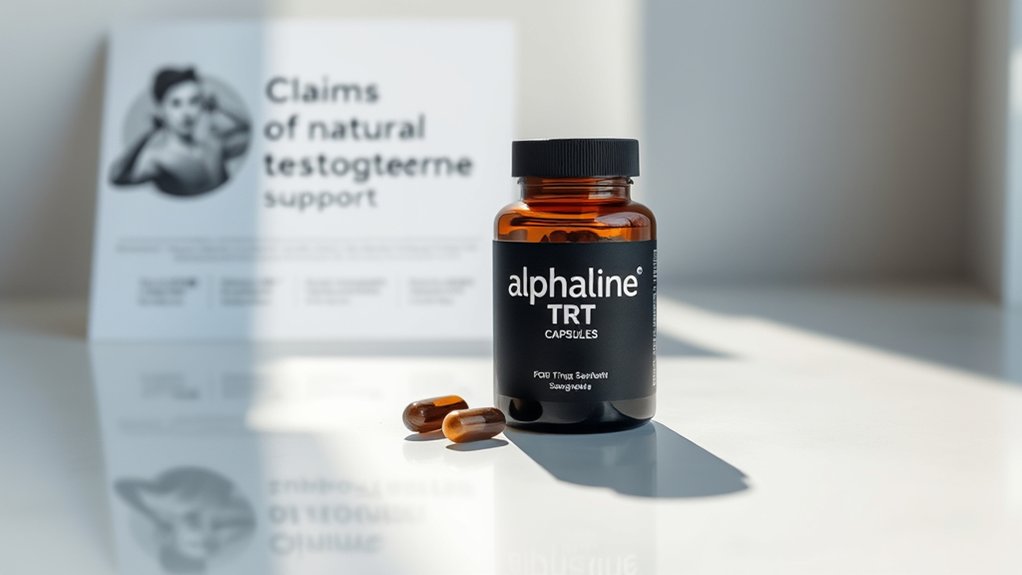
Alphaline TRT Capsules market themselves as a “testosterone support” option intended to help you raise or normalize androgen levels, with the goal of improving common low-testosterone symptoms like low libido, reduced energy, and diminished muscle performance. The company implicitly positions the product to influence testosterone levels indirectly via dietary compounds, not via prescription hormones. In an evidence-based review, you should treat these claims as unproven unless validated by well-controlled human trials showing consistent changes in total and free testosterone, along with symptom improvement. Claims of supplement efficacy are often based on in vitro data, small studies, or theoretical pathways that don’t translate to clinical outcomes. You also need to recognize risks: unknown dosing, ingredient variability, and potential interactions.
What “Natural TRT” Marketing Usually Means
When you see “natural TRT” marketing, it usually isn’t true testosterone replacement; it often implies boosting endogenous hormones or reducing symptoms without providing equivalent clinical outcomes. These products commonly lean on proprietary blends and plant extracts (e.g., “testosterone boosters” like fenugreek, tongkat ali, or tongkat-derived compounds) with evidence that’s often limited, variable, and not consistently replicated in larger trials. You should treat these claims cautiously because ingredient labeling, dosing, and real-world safety/efficacy data are frequently uncertain, and some “natural” ingredients can still affect liver enzymes, hormones, or interact with medications.
Natural TRT” Claims Explained
“Natural TRT” marketing usually means a supplement is being sold as if it can drive testosterone levels upward the way prescription testosterone does, but it typically can’t replicate TRT’s predictable, hormone-level effects. When you see “supports natural testosterone” and “restores hormone balance,” understand the claim is often based on indirect mechanisms—like altering upstream pathways, reducing stress, or modestly affecting libido—not on reliably raising serum testosterone to TRT ranges. You may feel temporary changes from non-hormonal factors (sleep, training, placebo), which can be misread as true hormonal restoration. Clinically, unless an intervention shows consistent dose-dependent changes in blood testosterone and downstream outcomes, you should treat “natural TRT” as marketing language, not medical treatment.
Typical Ingredients And Effects
Typical “natural TRT” formulas usually bundle vitamins, minerals, and plant extracts that may influence upstream pathways involved in testosterone production or androgen signaling. If you’re evaluating testosterone boosters or herbal remedies, you should expect ingredients like zinc, vitamin D, magnesium, fenugreek, ashwagandha, or tribulus—often marketed as “TRT-like,” yet evidence is mixed and dosing consistency is uncertain. In practice, effects are usually subtle: improved libido, modest strength gains, or changes in biomarkers only in deficient users. However, “natural” doesn’t mean risk-free—product contamination, hormone-like activity, and drug interactions are possible. You should also watch for androgenic side effects, liver strain, and estradiol shifts.
- Claims often extrapolate from small studies
- Effects depend on baseline deficiencies and adherence
- Unknown extract potency complicates safety monitoring
Alphaline TRT Capsules Ingredients List and Doses
You’ll want to start by mapping the exact Alphaline TRT Capsules ingredient list and how each component is dosed, because “natural TRT” blends can vary widely and may not meet clinical expectations. Reported dosage amounts for key actives should be checked against label specifics and any available third-party verification, since under-dosing or hidden compounds can undermine efficacy and raise safety risks. You should also review any included plant extracts for standardized levels and interaction potential (e.g., effects on hormones, liver metabolism, or blood pressure), rather than assuming benefit from the presence of botanicals alone.
Key Ingredient List Breakdown
Alphaline TRT Capsules list ingredients that’re intended to support testosterone-leaning pathways, so it’s critical to understand what you’re actually taking. In a clinical lens, you should scrutinize ingredient sourcing and dosage accuracy before considering any “TRT-like” claim—especially with supplements where third-party verification is inconsistent. Without transparent standardization, you can’t reliably map labeled components to pharmacologic effects, and the risk of underdosing or adulteration rises. Some key components may target hormonal synthesis, androgen receptor signaling, or libido indirectly; however, evidence quality is often limited, and potency can vary by batch.
- Check for standardized extracts vs proprietary blends, which obscure dosage accuracy.
- Demand documentation of ingredient sourcing (GMP, COAs, contamination testing).
- Compare ingredient rationale to human trials, not in vitro or animal data.
Verified Dosage Amounts Reported
Reported “verified” dosages for the Alphaline TRT Capsules’ ingredient list can’t be assumed accurate without third-party documentation, because most supplement labels don’t provide batch-level potency confirmation. From an evidence-based standpoint, you should treat the listed doses as claims until independent testing verifies dosage accuracy. In clinical terms, the key risk isn’t just whether ingredients are present—it’s whether the per-capsule amounts match the label across production runs. If the brand doesn’t disclose independent COAs, validated assays, or consistent manufacturing controls, ingredient transparency remains limited, and you can’t reliably estimate biological effect or safety margins. For TRT-adjacent products, small deviations may meaningfully alter hormone-related outcomes. Check for third-party verification before you consider use.
Included Plant Extracts Summary
Plant extracts are a central part of Alphaline TRT Capsules’ formula, but the clinical relevance depends on whether the label’s per-capsule doses match what’s actually manufactured and bioavailable. You should treat “plant benefits” claims as hypothesis-generating until you see standardized, dose-quantified extracts and independent analysis. Many botanical ingredients vary by species, harvest, and extraction method, which can blunt herbal efficacy even when the label lists a number. Also, plant extracts may interact with hormones, liver enzymes, or medications, raising safety risk in TRT-adjacent users.
- Check whether each extract is standardized to active markers (not just total herb mass).
- Look for third-party testing confirming identity, purity, and potency.
- Compare claimed doses to known effective ranges from human evidence for Herbal Efficacy.
Do Any Ingredients Actually Support Testosterone?
Do any of Alphaline’s ingredients actually support testosterone in humans, or are you mostly paying for claims that don’t translate beyond the label? When you evaluate Testosterone Boosters and Herbal Remedies, you should look for compounds with consistent, clinically meaningful effects on measured testosterone—not just traditional use. Many botanical ingredients have mixed, small trials, often using surrogate endpoints (like libido) rather than serum levels. If an ingredient only shows modest changes in healthy men, benefits in eugonadal ranges may be negligible. If studies are limited to animals, in vitro work, or non-comparable dosing, you can’t infer real endocrine support. The risk is false reassurance: you delay proven evaluation for hypogonadism and may miss treatable causes.
Evidence Check: Clinical Studies for Key Compounds
You should look for published clinical trials on Alphaline’s ingredients and check whether they were conducted in humans with relevant endpoints. When evaluating human studies on testosterone metrics, focus on changes in total and free testosterone, SHBG, symptom-linked outcomes, and the consistency of results across trials. You also need to weigh evidence strength against risks—especially potential adverse effects and the possibility that benefits seen in specific populations may not generalize to you.
Clinical Trials On Alphaline Ingredients
Clinical evidence for Alphaline’s key ingredients is limited, so you should treat any TRT-related claims as provisional until they’re supported by well-controlled human trials showing meaningful testosterone or symptom outcomes. When you look for clinical efficacy, you should separate mechanistic lab data from real-world effects; many ingredient studies are small, short, or indirect, so they can’t reliably predict endocrine changes. You also need ingredient safety: “natural” doesn’t mean risk-free, and trial reporting on adverse events, dosing consistency, and interactions is often incomplete.
- Human trials are sparse; outcomes may not reach clinically relevant thresholds
- Study quality varies, weakening conclusions about clinical efficacy
- Lack of robust ingredient safety data limits risk-benefit confidence
If you’re considering use, you should verify dosing, evidence strength, and contraindications first.
Human Studies On Testosterone Metrics
Because Alphaline’s TRT promises hinge on endocrine outcomes, it helps to look specifically at what human studies show for testosterone metrics—not just lab mechanisms. In randomized trials of testosterone boosters or prohormones, you usually see modest changes in total or free testosterone, but effects vary widely, often without sustained normalization. This matters because baseline status, dosing, and concurrent training can drive testosterone fluctuations that mimic “support” rather than true restoration. For hormonal balance, the best human evidence involves direct testosterone therapy; it consistently raises levels but also increases risks like erythrocytosis, suppression of endogenous production, and altered lipids. If an ingredient claims TRT-like benefits, you should expect comparable, clinically meaningful outcomes across time, which many studies do not demonstrate.
Common Red Flags in Alphaline TRT Capsules Reviews
Have you noticed how some Alphaline TRT capsules reviews raise immediate concern—before any real symptom improvement is even discussed? When you’re evaluating red flag indicators, focus on whether claims are supported by verifiable data and credible testosterone metrics. A common issue is poor review credibility: vague timelines, exaggerated “testosterone boosts,” and testimonials that lack baseline labs, dosing details, or adverse-event reporting. If the reviewer can’t describe bloodwork (total/free T, SHBG, LH/FSH) or control for confounders, you should treat it as low-quality evidence. Also watch for coordinated language, affiliate-heavy posting, or brand-sponsored “before/after” photos that don’t explain methodology.
Be wary of vague Alphaline TRT reviews—prioritize verifiable labs, dosing details, and safety info over exaggerated testosterone claims.
- No linked clinical studies or lab results
- Repeated wording across multiple reviews
- Missing safety discussion (e.g., contraindications, side effects)
How Fast Should You Expect Results From Alphaline TRT?
How quickly should you expect results from Alphaline TRT—and what’s realistic? If Alphaline is improving androgen status, changes in testosterone levels aren’t instant. In clinical settings, measurable shifts in serum testosterone often appear after consistent dosing for several weeks, with symptom improvements typically lagging behind lab changes. A reasonable expected timeline is about 2–4 weeks to notice early signs (e.g., energy, libido), but verify with repeat morning bloodwork rather than guesswork. If you’re truly hypogonadal, you may see clearer improvements by 6–12 weeks, coinciding with stabilization of hormone levels. Be cautious: if you see no lab change after a trial period, you should reassess efficacy and confirm dosing adherence.
Possible Side Effects and Who Should Avoid It
Even if you’re seeing early symptom changes from Alphaline TRT, you should also plan for potential adverse effects and know who shouldn’t use it. Testosterone modulation can shift lipid profiles, increase blood viscosity, and worsen acne or fluid retention; you may also notice mood changes, sleep disturbance, or changes in libido. Because supplement dosing and purity aren’t always tightly controlled, you need to treat possible side effects as a realistic risk, not a rare event.
You should avoid it (or only use under specialist care) if you have these contraindication factors:
- Prostate cancer, high PSA, or untreated severe lower-urinary-tract symptoms
- Uncontrolled cardiovascular disease, prior stroke/MI, or high hematocrit
- Known liver disease, infertility concerns, or plans for pregnancy
How to Use Alphaline TRT Capsules Safely
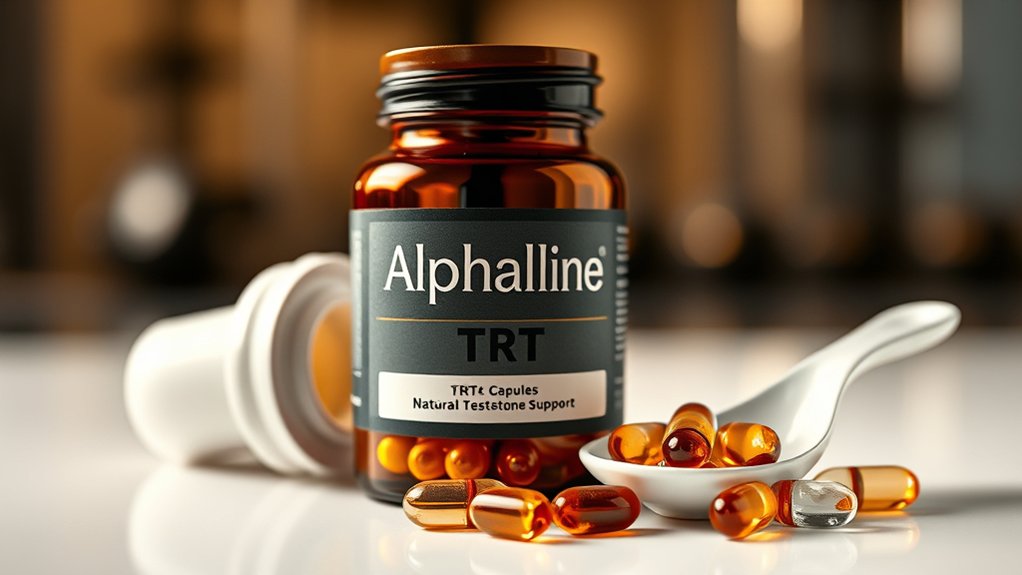
When you’re considering Alphaline TRT capsules, the safest approach is to treat them like a medical intervention: use only as directed, confirm your product’s dosing schedule and ingredient transparency, and avoid combining it with other testosterone or hormone-affecting supplements without clinician input.
Before starting, check your baseline labs with your clinician (e.g., testosterone, hematocrit, lipids). Start with the lowest recommended safe dosage and don’t “stack” or escalate faster than the label. If you miss a dose, don’t double—resume the next scheduled dose. Monitor for adverse effects (acne, mood changes, edema, blood pressure). Tell your clinician promptly if symptoms occur or if you’re taking anticoagulants, thyroid meds, or have prostate risk factors. Be skeptical of user testimonials, since anecdotes can mask confounding and inconsistent dosing.
Does Alphaline TRT Capsules Work for TRT-Like Symptoms?
You might be considering Alphaline TRT Capsules for TRT-like symptoms, but the overlap with true testosterone deficiency is often incomplete and symptom-based improvement isn’t the same as normalized labs. Current evidence for TRT-like effects is limited, so you shouldn’t expect consistent changes in testosterone, libido, or energy without objective biomarker confirmation. If any response occurs, it typically would be assessed over weeks, and you should monitor for risks like hormone-related adverse effects and avoid delaying appropriate medical evaluation.
Symptom Targets And Overlap
Alphaline TRT Capsules are marketed as targeting symptoms commonly associated with low testosterone, but their evidence for relieving “TRT-like” complaints depends on whether your symptoms stem from androgen deficiency versus other causes (e.g., thyroid disease, medication effects, sleep apnea, depression, or primary hypogonadism). You should assume broad symptom overlap: reduced libido, fatigue, and mood changes are nonspecific and often driven by mechanisms unrelated to testosterone deficiency. If you treat the symptom without confirming etiology, you risk delaying diagnosis and appropriate care.
- Evaluate labs and timing: morning total/free testosterone, SHBG, LH/FSH before self-treatment
- Screen high-risk mimics: OSA, hypothyroidism, opioids/antidepressants, major depression
- Recognize partial overlap: some symptoms may improve, but cause remains unproven
Evidence For TRT-Like Effects
Evidence for “TRT-like” effects from Alphaline TRT Capsules is limited, and it depends on whether your symptoms actually reflect androgen deficiency rather than a different cause. If your low libido, fatigue, or low mood stem from sleep loss, depression, thyroid disease, obesity, medications, or high prolactin, testosterone boosters won’t address the root issue, and you could delay needed care. Trials of “natural testosterone support” products are generally small, short, and use varying ingredients, so hormonal balance changes may be inconsistent, subtle, or placebo-driven. In practice, you should expect no reliable restoration of clinical hypogonadism without verified low serum testosterone and appropriate monitoring. If you consider use, discuss risks, interactions, and baseline labs first.
Timeline And Expected Results
For most men, any “TRT-like” benefits from Alphaline TRT Capsules—if they occur at all—tend to show up gradually over weeks rather than days, because many “testosterone support” formulas can only modestly influence upstream signals (like libido, energy, or mood) rather than reliably replacing deficient testosterone. Track changes with baseline labs and symptoms before you start; otherwise you can’t judge the results timeline or expected benefits. If you don’t see improvements by 6–12 weeks, continued use is unlikely to correct true hypogonadism, and you may miss needed evaluation.
- Libido/mood may shift first, but androgen markers usually lag
- Effects are variable; placebo response is common in supplements
- If symptoms worsen, stop and seek clinical care, especially with elevated risk factors
Pricing vs Value: What You Get for the Money
How much are you really paying versus what you’re actually getting with Alphaline TRT capsules? For a proper cost comparison, you should compare the total cost per day and align it with each capsule’s clinically meaningful ingredient dose. If the label doesn’t clearly specify standardized amounts, bioavailability, and dosing rationale, your value assessment is weak. Evidence for “natural testosterone support” remains limited; without trial-backed endpoints (testosterone levels, symptom scores, sustained follow-up), efficacy claims are uncertain. You may also face opportunity cost and safety risk: long-term use of unverified blends can worsen lipid profiles, affect blood pressure, or interact with medications. Price alone doesn’t guarantee benefit—pay only when evidence and dosing transparency support the risk.
Where to Buy Alphaline TRT Capsules and Shipping Clues
Before you buy Alphaline TRT capsules, you should verify the seller’s legitimacy and how they ship, because “TRT support” products often differ in label accuracy, standardization, and storage conditions that affect ingredient stability. Start by checking purchase locations: the official website, authorized retailers, or reputable pharmacies. Then evaluate shipping options: look for temperature-controlled or clearly described warehousing, tracking, and documented fulfillment times. If you see vague delivery windows, no tracking, or unusually low costs for cross-border transit, you should treat that as a higher risk signal for potency loss.
- Confirm lot numbers, expiration dates, and storage handling on arrival
- Prefer sellers offering tracked shipments and consistent fulfillment
- Avoid marketplaces with unclear sourcing and third-party relabeling
How to Tell If It’s a Legit Supplement or Scam
So, what signs actually tell you whether Alphaline TRT Capsules are a legitimate supplement—or a potential scam? Start by checking labeling: look for a complete Supplement Facts panel, standardized doses, and an identifiable manufacturer. Vague “proprietary blends” and missing lot/batch codes are red flags. Verify supplement authenticity via third-party testing (USP, NSF, Informed Choice); absence increases risk of contamination or under-dosing. Next, scrutinize scam indicators in marketing: unrealistic testosterone claims, guaranteed “TRT-like” results, and pressure tactics. Also confirm the company provides transparent contact details and responsive customer support. If warnings, adverse-event reporting, or clinical references are missing, treat it cautiously.
| Red flag | Why it matters |
|---|---|
| No third-party tests | authenticity uncertain |
| Proprietary blend | dosing unclear |
| Missing manufacturer | traceability fails |
| “Guaranteed” results | misleading efficacy |
| Pressure sales | scam indicators rise |
Better Alternatives Than Alphaline TRT Capsules
Even if Alphaline TRT Capsules market themselves as “TRT-like,” you’re usually safer choosing options with clearer dosing, third-party testing, and documented safety profiles. Instead of relying on vague blends of natural supplements and testosterone boosters, look for products that use well-studied ingredients, specify milligrams per serving, and publish Certificates of Analysis from independent labs. You should also prefer approaches that address underlying causes of low testosterone, like sleep restriction, obesity, and vitamin D insufficiency, rather than chasing hormone shifts you can’t verify.
- Verify third-party testing and batch consistency (COA per lot).
- Choose ingredients with human data and dose transparency.
- Discuss risk factors and monitoring with a clinician before use.
Common Questions
Is Alphaline TRT Capsules Fda-Approved or Regulated as a Medicine?
Alphaline TRT Capsules aren’t FDA-approved as a prescription medicine, and you shouldn’t assume FDA regulation like that. Dietary supplements generally bypass the drug approval process; they’re marketed under different rules, with only limited FDA oversight before products reach consumers. You’ll want to check whether it’s registered as a supplement, look for third-party testing, and be cautious about hormone-claim accuracy, contamination, and dosing risks. If you’re considering use, talk to a clinician first.
What Third-Party Lab Testing or COAS Verify Alphaline’s Potency and Purity?
Third-party lab testing or COAs for Alphaline should ideally come from an independent lab using validated assays (e.g., HPLC/GC) and include batch numbers. If the brand only posts marketing certificates without a matching lot, you should treat potency claims as unverified. I’ve seen a friend trust a “COA,” but the batch number didn’t match his bottle—an easy red flag. Check ingredient sourcing too; review customer testimonials cautiously.
Does Alphaline Interact With Testosterone, Antidepressants, or Blood-Pressure Medications?
Alphaline may affect testosterone levels, but evidence is limited, so you can’t assume medication safety. If you use antidepressants, stimulants, or other hormone-altering drugs, interactions are possible via effects on mood, metabolism, or liver enzymes. With blood-pressure medications, any supplement that shifts androgen signaling could indirectly change vascular tone. You should check COAs, start only under clinician guidance, and monitor labs (TT/free T, CBC, lipids, BP).
Will Alphaline Show up on Drug Tests or Affect Hormone-Related Lab Results?
Alphaline is unlikely to show up on standard urine drug tests, since most tests target specific illicit drugs rather than supplements. Still, you can’t rule out false positives from undisclosed ingredients. It may affect hormone-related lab results by shifting testosterone metabolism markers or altering hormone balance, especially if it contains testosterone precursors, herbs, or steroid-like compounds. Tell your clinician what you’re taking, and consider timing labs after stopping.
Are Customer Reviews Real, and How Do Refunds/Guarantees Work?
Yes, some customer reviews may be real, but you can’t assume authenticity—look for patterns like identical wording, missing specifics, or review timing spikes. For refunds/guarantees, verify the exact refund policies in writing: deadlines, return conditions, and whether “free trials” or shipping fees void coverage. Evidence-based risk-wise, treat testimonials as low-grade data and confirm terms with the seller before buying to protect customer satisfaction.
Overall
In a clinical, evidence-based sense, Alphaline TRT Capsules appear more like marketing than a proven testosterone therapy. Many “natural TRT” claims rely on indirect effects and ingredients that haven’t been supported by strong, well-controlled human trials demonstrating measurable testosterone recovery. If you’re dealing with low testosterone symptoms, don’t rely on promises—get the right labs (total/free testosterone, SHBG, LH/FSH, and relevant markers) and work with a qualified clinician to determine whether TRT—or another evidence-based approach—is appropriate for your situation.
Take action now: schedule a lab check, review your results with a healthcare professional, and only then choose a treatment plan you can trust. Avoid gambling your health on supplement claims that can’t reliably reproduce clinical outcomes. Your next step should be clarity, not guesswork—