
If you’ve been searching for a testosterone supplement that actually does something, you’re not alone. But “testosterone support” can mean everything from harmless nutrition to ingredients that may only help in very specific situations—like when levels are genuinely low. The hard part is that many people judge a formula by how it sounds, not how it fits their body, and androgen hormones don’t respond to guesswork. A supplement may look promising on a label, yet fall flat if your baseline, timing, lifestyle factors, or dosing consistency aren’t aligned with the biology of androgen signaling.
In this review of Testovate, we’ll cut through the hype and focus on what matters: the strength of the ingredient evidence, the most plausible ways a product could support circulating testosterone (or related pathways), and what the research and expert guidance suggest about results. Just as importantly, we’ll cover who should be cautious or avoid it due to potential contraindications, so you can make a smarter decision before investing time or money.
Great Points
- Evaluate ingredient identities, forms, and exact dosages, since proprietary blends limit dose-response assessment.
- Check evidence from dose-ranging, peer-reviewed studies matching Testovate’s testosterone-raising mechanisms and amounts.
- Consider candidate suitability: use mainly for documented low testosterone; avoid with prostate/breast cancer, untreated sleep apnea, or infertility.
- Follow consistent dosing and meal timing, since testosterone and symptom changes typically emerge within hours to weeks.
- Monitor safety markers like hematocrit, lipids, and blood pressure, and watch for androgen side effects and drug interactions.
Testovate Ingredients: What’s Really Inside
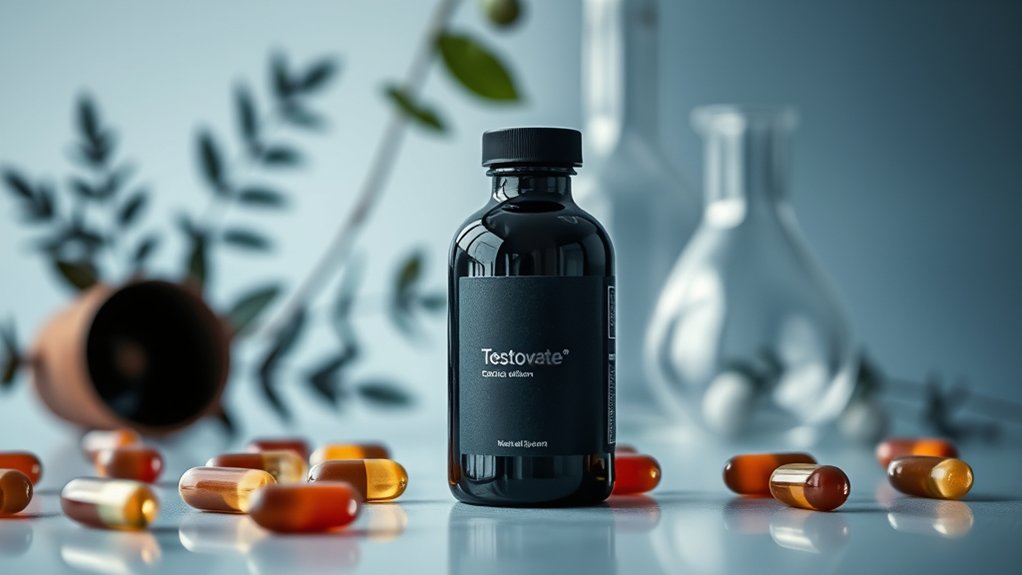
Testovate’s ingredient panel matters because the way each component is dosed and delivered determines whether you’ll see any mechanistic payoff (or just marketing). When you evaluate the label, focus on ingredient sourcing and formula transparency: you want specific identities, forms, and amounts tied to plausible physiology. Peer-reviewed dosing principles in supplements suggest bioavailability depends on excipients, particle size, and release kinetics; if delivery isn’t stated, mechanistic inference weakens. Next, map each ingredient to intended pathways—e.g., androgen receptor signaling, steroidogenic enzymes, or SHBG modulation—and ask whether the stated dose reaches ranges used in human or translational studies. If proprietary blends replace mg values, you can’t judge dose-response, so effects remain uncertain. Your best evidence is batchable, quantifiable formulas, not vague “testosterone support.”
Does Testovate Use Evidence-Based Testosterone Support?
Does this formula actually align with how testosterone support works in human physiology, or is it mostly name-brand “testosterone support” without actionable dosing? You should demand evidence sources that map to known mechanisms: luteinizing hormone signaling, testicular Leydig function, and aromatase/5α-reductase balance. Look for peer-reviewed, dose-ranging studies and clear “how much per serving” alignment; otherwise, study analysis can’t verify plausibility or effect size. Evidence-based products typically reference trials where the same botanical/compound and comparable amounts increased circulating testosterone or improved androgen-dependent endpoints.
| Claim type | Mechanism target | Evidence threshold |
|---|---|---|
| LH signaling | pituitary–testis axis | RCT with dosing |
| Aromatase modulation | estrogen/testosterone ratio | mechanistic + trials |
| Androgen metabolism | DHT/clearance | measured biomarkers |
Who Can Benefit From Testovate and Who Should Skip It
Who’s most likely to benefit from Testovate—and who should skip it—depends on whether you have a plausible, evidence-linked testosterone-lowering driver and whether you can safely trial a supplement that may nudge androgen signaling (e.g., through LH-axis support) without meaningfully altering hormones beyond your needs. You may be a better candidate if you’ve documented low testosterone or high-normal values with clear contributors like obesity, sleep restriction, or certain micronutrient deficiencies, where small, axis-supportive interventions could improve physiology. In contrast, who should skip it includes anyone with known prostate or breast cancer, severe untreated sleep apnea, unexplained infertility, or those already using anabolic steroids, TRT, or potent hormone-modulating drugs—because of potential risks like androgenic stimulation and lab-driven adverse effects. If you can’t obtain baseline and follow-up testing, don’t start.
What Results From Testovate Are People Claiming
People claim Testovate boosts libido and energy, but those subjective outcomes don’t map cleanly to mechanistic expectations of testosterone-related effects without controlled trials. Some also report muscle gains and specific timelines, which should be interpreted cautiously since hypertrophy depends on training load, protein intake, and baseline hormones rather than a supplement alone. If you’re tracking results, you’ll want peer-reviewed evidence and clinically meaningful endpoints (e.g., validated strength gains and hormone panels), not only self-reports.
Reported Libido And Energy Gains
Many users report noticeable improvements in libido and day-to-day energy after starting Testovate, which is consistent with how testosterone repletion can influence androgen-sensitive pathways. If your baseline testosterone is low, you may see libido improvement via effects on central motivation and peripheral sexual function, alongside energy enhancement through changes in mitochondrial efficiency, erythropoiesis signaling, and reduced fatigue perception.
In reporting, you’ll often notice timing patterns that align with symptom catch-up after androgen restoration:
| Timeframe | Common report |
|---|---|
| Days 1–7 | Milder alertness |
| Weeks 2–4 | Libido improvement |
| Weeks 4–6 | Energy enhancement |
| Weeks 6–8 | Stable drive |
| Ongoing | Fewer “slumps” |
Mechanistically, these outcomes mirror peer-reviewed relationships between androgen status and well-being, though placebo and regression-to-the-mean still apply—so track changes carefully.
Muscle Growth Claims And Timelines
As your testosterone levels stabilize, reported muscle-growth outcomes with Testovate typically follow a timeline that tracks androgen-driven changes rather than immediate “pump” gains. In the first 2–4 weeks, people often report improved muscle recovery and better performance during strength training, which aligns with anabolic signaling changes that require time. Around weeks 4–8, strength gains tend to precede visible size because neural adaptations and increased training quality raise total volume. If you’re consistent, weeks 8–12 are when some claim measurable hypertrophy, driven by improved protein synthesis and satellite-cell activity rather than rapid water shifts. Evidence from androgen physiology and resistance-training trials suggests real growth is gradual, so absence of size after 12 weeks is plausible. Expect variability based on diet, dose, and adherence.
How to Take Testovate for Typical Testosterone Support
To support typical testosterone goals, you should follow the product’s recommended daily serving to maintain consistent androgenic signaling over time. Taking Testovate with meals may improve absorption and reduce gastrointestinal side effects, aligning with pharmacokinetic principles for oral supplements. If you’re timing doses, aim for the same time each day to support steady exposure rather than peaks and troughs.
Follow Recommended Daily Serving
For typical testosterone support, you’ll generally follow the product’s label and take Testovate once daily as directed, because androgenic support is most practical when you maintain a relatively steady intake over time rather than using intermittent dosing. This aligns with mechanistic endocrine principles: stable exposure can help preserve downstream androgen receptor signaling and reduce day-to-day variability in anabolic cues. In your daily routine, treat the recommended dose as the serving suggestions baseline—don’t upshift, skip, or “stack” capsules to chase faster effects. Peer-reviewed nutrition and supplement guidance generally emphasizes adherence to validated dosing to minimize risk and confounding from irregular intake. If you miss a serving, take the next scheduled dose—don’t double.
Take With Meals For Best Absorption
Pairing your daily dose with meals can help improve overall tolerance and support more consistent gastrointestinal absorption, which matters when you’re aiming for steady androgen-support effects. When you take Testovate “with” food, fat and bile secretion increase, which can enhance dissolution and intestinal uptake of lipophilic constituents. This is consistent with absorption techniques described across oral nutraceutical trials, where fed-state pharmacokinetics often show higher bioavailability and less gastric irritation than fasted dosing. For practical meal timing, take it during your largest meal or within 30 minutes after eating, then keep the routine daily to minimize variability. Avoid skipping meals and don’t shift timing around high-fiber supplements that can delay transit. If you’re sensitive, split your dose with breakfast and dinner—still within the serving guidance.
How Long Does Testovate Take to Work?
So, how long does Testovate take to work? After you take it, you’re relying on testosterone absorption from its ingredients into systemic circulation. In well-studied oral testosterone-boosting approaches, blood testosterone typically rises within hours, then stabilizes over days as absorption reaches a steady state. Practically, you’ll often notice early changes in libido, mood, or training recovery within 2–4 weeks, because downstream androgen receptor signaling and gene transcription require repeated exposure. Over 6–12 weeks, body composition and strength markers can shift more clearly, assuming you’re using the ideal dosage and maintaining consistent dosing. If you skip doses or change meal timing drastically, testosterone absorption can vary and delay measurable effects. Track symptoms and labs to judge response.
Side Effects of Testovate and Common Warning Signs

Even when Testovate improves testosterone signaling, it can also cause side effects because its ingredients may shift androgen activity and downstream hormone pathways (and, depending on the formula, can also affect lipids, estrogen conversion, or blood-sugar regulation). You should treat side effects as plausible health risks, especially if you deviate from recommended dosage effects or combine it with other androgenic agents. Peer-reviewed endocrine evidence suggests vigilance for androgen-sensitive tissues and metabolic markers; ingredient safety depends on dosing, purity, and your baseline status. Watch for these warning signs from user experiences and consider product comparisons that report independent testing:
Even if Testovate improves testosterone signaling, ingredients may shift hormone pathways—treat side effects as real risks, especially off-dosage or with other androgens.
- Elevated hematocrit or BP-related symptoms
- Worsened acne-like skin changes or irritability
- Swelling, shortness of breath, or chest discomfort
- Persistent GI upset or unusual lipid/glucose trends
Can Testovate Cause Hormone Imbalances or Acne?
You might wonder if Testovate can trigger acne or hormone shifts, since exogenous androgens can increase sebum production and potentially worsen follicular inflammation. Depending on your dose and individual androgen sensitivity, fluctuations in LH/FSH suppression can contribute to transient endocrine imbalances, though the magnitude varies across studies. If you notice new breakouts or other side effects, paying close attention to dose timing and reporting changes promptly helps connect causality to peaks in androgen exposure.
Acne Risk And Breakouts
Can Testovate trigger acne by disrupting hormones or increasing breakouts risk? If you’re prone to acne, you might be more vulnerable because exogenous anabolic/androgenic effects can raise sebum output and promote follicular plugging. Mechanistically, androgens act on sebaceous glands, increasing lipid production and stimulating keratinocyte proliferation—conditions linked to acne formation and acne severity. Even without overt clinical “hormone imbalance” symptoms, androgen-driven changes can coincide with hormonal fluctuations that worsen inflammation. Peer-reviewed acne biology supports that higher sebum and altered follicular microenvironments correlate with flares. Consider these practical risk checks:
- Track new comedones within 2–8 weeks.
- Note oily skin changes after dosing.
- Watch for inflammatory papules on jaw/chest.
- Compare against baseline photos weekly.
Hormone Imbalance Possibilities
Hormonal changes are a plausible pathway for acne flares, since androgenic activity can alter hypothalamic–pituitary–gonadal signaling, shift circulating androgen levels, and increase sebum production in sebaceous glands. If you use a testosterone-boosting supplement, you may experience hormonal fluctuations that transiently raise or destabilize androgen activity, then later trigger compensatory feedback that contributes to testosterone decline. Peer-reviewed endocrinology links abrupt androgen shifts with follicular keratin plugging, inflammation, and comedone formation. However, direct evidence that short-term Testovate-equivalent formulas cause clinically significant hormone imbalance or acne in all users is limited; individual baseline androgen status, age, and skin biology matter. You should consider monitoring for symptoms consistent with altered endocrine signaling if breakouts coincide with starting.
Dose Timing And Side Effects
Timing matters because the hypothalamic–pituitary–gonadal axis responds to shifts in circulating androgens, and many androgen-targeting supplements can produce short-lived increases in serum availability or signaling before downstream homeostatic feedback kicks in. You should match Testovate timing to your goal, because changing dose frequency alters peak/trough patterns that can indirectly influence LH/FSH output. If absorption rates are fast, you may see transient androgen elevations, followed by compensatory reductions, which can feel like “hormone swings.” For side effects, acne is biologically plausible via androgen-driven sebocyte activity and follicular keratinization, especially during higher peaks. Watch for:
- Rapid onset after dosing (peak-related)
- New oily skin or clogged pores
- Mood/sleep changes with troughs
- Lab evidence of androgen/estradiol imbalance
If symptoms persist, stop and consult a clinician.
Drug Interactions and Contraindications With Testovate

Before you start Testovate, it’s important to understand that drug interactions and contraindications mainly hinge on how exogenous androgens can alter steroid receptor signaling, hepatic enzyme activity, and fluid retention, which then changes both efficacy and safety risk. For testovate contraindications, avoid it if you have prostate or breast cancer, untreated severe sleep apnea, uncontrolled heart failure, or elevated hematocrit, since androgen-driven androgen receptor activation and erythropoiesis can worsen outcomes. For drug interactions, be cautious with anticoagulants (warfarin), because testosterone can reduce clotting factor production and shift INR; with glucocorticoids, because combined androgen–steroid therapy can increase edema; and with enzyme inducers like rifampin, which may lower androgen levels via CYP metabolism. Regular labs are essential.
Is Testovate Worth the Cost Compared to Alternatives?
Is Testovate worth the cost compared to alternatives depends less on marketing and more on measurable outcomes—how reliably you achieve clinically meaningful increases in testosterone, symptom improvement, and consistent safety monitoring for your specific risk profile. For a real value assessment, treat this as a pricing analysis problem: compare total monthly cost to expected dose, bioavailability, and monitoring requirements.
Testovate’s value hinges on measurable testosterone gains, real symptom improvements, and consistent safety monitoring—not marketing claims.
Use this cost comparison checklist:
- Serum testosterone change vs baseline (timing, magnitude).
- Symptom endpoints (libido, energy, mood) alongside objective markers.
- Safety performance (hematocrit, PSA, lipids) and adherence to monitoring.
- Net value after shipping, subscriptions, and clinician oversight.
Then weigh alternative options on your budget considerations. If effect sizes and safety monitoring are comparable, investment justification favors the lowest effective cost; if not, pay only when mechanistic, peer-reviewed outcomes support it.
Testovate Reviews: What Patterns Show Up in Feedback
When you read Testovate reviews, the most informative feedback tends to cluster around measurable outcomes rather than brand claims—specifically how quickly people notice symptom change and how consistently they hit expected serum testosterone ranges. From a performance evaluation perspective, the tightest feedback trends are often about timing (weeks vs months), adherence-related variance, and whether lab-based monitoring aligns with reported androgenic effects. In user experience terms, user testimonials that mention consistent dosing and structured tracking tend to score higher on customer satisfaction, while sporadic use correlates with ambiguous effects. Mechanistically, this pattern fits a pharmacokinetic and endocrine feedback model: small schedule deviations can blunt downstream LH/FSH signaling and subjective symptom relief. Overall, these feedback trends improve product effectiveness assessment by prioritizing reproducible outcomes over marketing language.
How to Buy Testovate Safely and Avoid Counterfeits
After you’ve looked at what patterns show up across Testovate reviews, you can reduce your counterfeit risk by buying through channels that publish lot-level identifiers and verify chain-of-custody documentation. For safe purchasing, mechanistically trace how legitimacy is established: validated manufacturing batches, consistent labeling, and quality controls reduce the odds of adulteration or wrong dosing. Peer-reviewed supply-chain guidance supports this approach because authenticity signals correlate with fewer deviations in chemical profiles and safety outcomes.
Trace lot-level identifiers and chain-of-custody, ensuring validated batches and consistent labeling to reduce counterfeit and wrong-dosing risks.
Use these counterfeit warnings checklist items:
- Choose sellers who display lot/expiry and match them to product certificates.
- Avoid marketplace listings without verifiable manufacturer contact.
- Confirm tamper-evident seals and intact packaging on arrival.
- Keep receipts and batch records for adverse-event follow-up.
If something feels unverifiable, don’t buy.
Common Questions
Does Testovate Require a Prescription or Lab Testing Before Use?
You typically don’t need a prescription to buy Testovate, since it’s marketed as an over-the-counter supplement rather than a drug. You usually also don’t need mandatory lab testing before use, but evidence-based practice still supports baseline labs (total/free testosterone, SHBG, lipids, hematocrit) because supplement effects vary by dose and bioavailability. If you have symptoms of hypogonadism, consider Testosterone alternatives with clinician oversight.
Will Testovate Affect My Fertility or Sperm Count?
Yes—Testovate could negatively affect fertility and sperm count if it functions like other testosterone boosters. Mechanism: higher exogenous testosterone suppresses LH/FSH via negative feedback, reducing intratesticular testosterone and sperm production. Example: in peer‑reviewed studies of men using testosterone therapy, sperm counts often drop within weeks and may take months to recover after stopping. If you’ve got fertility concerns or low sperm health, talk to a clinician first.
Can Women Safely Use Testovate, and What Dosages Are Recommended?
Women generally shouldn’t use Testovate unless a clinician prescribes it, because testosterone can disrupt hormonal balance and suppress ovulation. Evidence-based guidance from endocrinology societies emphasizes adverse androgen effects, not “Testovate benefits.” There’s no well-established, peer-reviewed women dosage; dosing is individualized and monitored via serum testosterone, SHBG, LH/FSH, lipids, and liver markers. Watch for side effects like virilization, acne, hirsutism, voice deepening, menstrual changes, and clitoral enlargement.
Does Testovate Show up on Sports Drug Tests?
Does Testovate show up on sports drug tests? Probably not as “Testovate” by name, but if it contains testosterone or prohormone ingredients, it can elevate endogenous androgen markers that mass-spectrometry anti-doping labs detect. Think of your supplement as a Trojan horse: labeled “Testovate ingredients,” yet metabolized into testosterone-related compounds. Because results vary by dose and your metabolism, check the certificate of analysis; don’t ignore Testovate side effects or testing risk.
Is Testovate Safe for Long-Term Daily Use Beyond Eight Weeks?
Testovate’s safety for long-term daily use beyond eight weeks isn’t well established; the safety profile for prolonged testosterone/androgen supplementation depends on your baseline health. Mechanistically, chronic supraphysiologic signaling can suppress endogenous gonadotropins, raise hematocrit, worsen lipids, and strain cardiovascular risk. Evidence from peer-reviewed testosterone trials suggests monitoring, but data specifically for this product are limited. If you use it longer than 8 weeks, you need labs and clinician oversight to reduce potential long term effects.
Overall
Testovate *may* support testosterone—only to the extent that its ingredients correct nutrient gaps or supply proven building blocks that influence hormone production, and only if you use it consistently at the intended dose. A frequent concern is that “supplements can’t meaningfully change testosterone,” and that’s often true when baseline levels are already adequate. But when deficiency or suboptimal intake is present, results can be modest and measurable. Use this as a practical next step: start with a plan, keep dosing consistent, and decide in advance what “working” means for you (symptoms, energy, libido, sleep, and—most importantly—labs).
Before you commit long-term, check for contraindications, medication interactions, and red flags (especially if you’re on hormone therapy, fertility-related treatment, blood pressure meds, anticoagulants, or immunosuppressants). Then verify instead of guessing: track symptoms over time and confirm with objective testing (total and free testosterone, plus related markers as appropriate) before and after a reasonable trial period. If you want to move forward with clarity, use the checklist below to guide your next decision.