
If you’re dealing with bothersome BPH symptoms like weak urine flow, frequent urination, or sudden urgency, it’s natural to look for something that could help without a prescription. Prostate Max is one of the products that often appears in those searches—and its claims sound promising. But before you spend money or pin your hopes on a supplement, it’s important to pause and ask a simple question: does Prostate Max actually work, or is it mostly marketing?
In this article, we’ll cut through the hype by examining what’s behind Prostate Max—how it’s intended to support prostate and urinary function, what the ingredients may do, and whether there’s credible clinical evidence to back the results people report. We’ll also discuss why limited or uneven research, along with anecdotal reviews, can make outcomes hard to predict, so you can better understand what “works” may really mean for you.
Great Points
- Evidence for Prostate Max is limited; user testimonials suggest benefit but lack rigorous, controlled clinical proof.
- It’s marketed for BPH urinary symptoms, but effectiveness depends on ingredient absorption and consistent dosing.
- Standardized, well-dosed ingredients with credible targets matter; many components are supportive rather than evidence-based.
- Results are typically expected over 8–12 weeks, with no improvement after 12 weeks warranting clinician reassessment.
- Safety requires reviewing medication/supplement interactions and monitoring for worsening urinary retention or significant side effects.
What Prostate Max Claims to Improve

Prostate Max is marketed as a supplement that aims to improve urinary symptoms commonly linked with benign prostatic hyperplasia (BPH), such as weak urine flow, difficulty starting urination, and frequent nighttime urination. When you evaluate these claims, focus on patient-centered outcomes: symptom severity, time to meaningful improvement, and durability of effect. The product is positioned for prostate health and framed among natural remedies, implying it may support bladder and prostate function without prescription drugs. However, you should look for evidence that measures validated tools like the International Prostate Symptom Score (IPSS), objective flow metrics, and safety data over an adequate trial length. If results aren’t supported by rigorous clinical studies, you should treat the claims as unproven.
How Prostate Max Works in the Body
When you take Prostate Max, the key question is whether its active ingredients can be absorbed reliably through your gut and reach systemic circulation. If they do, you’ll want evidence that they target prostate tissue mechanisms relevant to LUTS and prostate enlargement, rather than acting broadly. Finally, you should look for clinically plausible effects on hormone balance (for example, via androgen metabolism) and understand the degree of benefit and safety shown in human studies.
Active Ingredient Absorption Pathways
Once you take Prostate Max, its active components first dissolve and then travel through your gastrointestinal tract, where absorption begins primarily in the small intestine. You rely on dissolution, luminal residence time, and intestinal conditions to support active transport and cellular uptake into enterocytes. From there, metabolism and first-pass effects can shape metabolic pathways before you reach systemic circulation. Absorption efficiency and nutrient bioavailability influence how much reaches target sites later, so you should consider dose timing with meals and individual gut variability.
| Step | What you should monitor |
|---|---|
| Dissolution | capsule breakdown, pH sensitivity |
| Uptake | active transport, cellular uptake |
| Metabolism | first-pass, metabolic pathways |
| Entry | systemic circulation, absorption efficiency |
Targeting Prostate Tissue Mechanisms
After absorption into systemic circulation, the active constituents in Prostate Max are intended to exert effects at prostate-relevant pathways by reaching prostate tissue and influencing cellular signaling involved in benign prostate growth and urinary symptom biology. When you take it, you’re relying on pharmacokinetic plausibility: compounds must distribute into the prostate, persist at biologically relevant concentrations, and engage targets without causing undue systemic adverse effects. In prostate tissue, signaling that supports smooth muscle tone and epithelial proliferation is thought to contribute to lower urinary tract symptoms. If the formulation modulates these pathways, you may experience health benefits such as improved urinary flow and reduced symptom burden. Clinically, however, meaningful outcomes depend on consistent dosing, trial-proven efficacy, and patient-specific factors like baseline severity and comorbidities.
Supporting Hormone Balance Effects
As Prostate Max moves through your bloodstream, its goal is to support hormone-regulated prostate pathways that influence both prostate size and urinary symptoms. You should think of hormonal regulation as a network: androgens, estrogen balance, and downstream signaling shape prostate growth, inflammation, and smooth-muscle tone. Evidence for most supplements is mixed, so you’ll want mechanistic plausibility plus clinical endpoints like International Prostate Symptom Score and PSA trends. Prostate Max is presented as balance support, aiming to complement your body’s endogenous regulation rather than override it.
| Pathway | What to monitor |
|---|---|
| Androgen signaling | urinary urgency, weak stream |
| Inflammatory modulation | nocturia frequency |
| Estrogen/androgen balance | PSA changes, tolerance |
| Oxidative stress | symptom stability |
| Smooth-muscle tone | flow rate consistency |
Prostate Max Ingredient List Breakdown
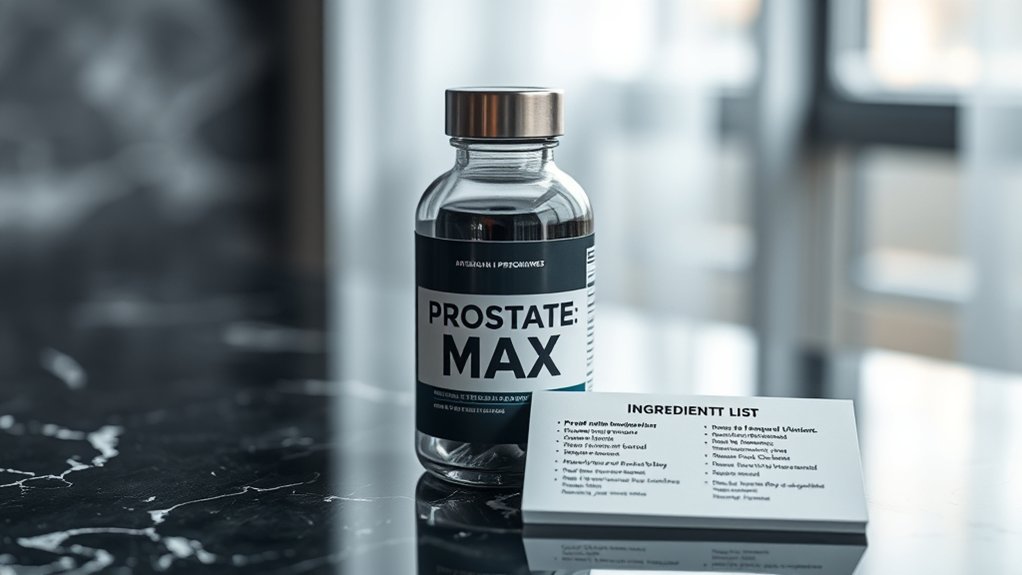
Prostate Max’s ingredient list is best evaluated by separating evidence-based, prostate-targeted actives from nutrients or botanicals that may support overall health. As you review it, focus on ingredient sourcing and formulation transparency: do labels specify standardized extracts, dosages per serving, and quality controls (e.g., third-party testing, heavy-metal screening, and batch traceability)? This matters because prostate outcomes depend on reliable exposure, not just “proprietary blends.” You should also note whether supportive ingredients are present in clinically plausible amounts, rather than symptom-covering add-ons.
- Prostate-targeted actives: verify dose, form, and standardized markers.
- Supportive nutrients/botanicals: check realistic serving quantities.
- Quality and sourcing: confirm sourcing, testing, and batch-level transparency.
Do the Key Ingredients Have Real Evidence?
Looking at Prostate Max’s ingredient list is one thing, but the real question is whether its key actives are backed by human evidence for prostate-related outcomes. To judge ingredient efficacy, you should focus on evidence sources: randomized controlled trials in men with BPH or lower urinary tract symptoms, not animal or lab studies. Check whether each ingredient was tested at doses comparable to the supplement, and whether outcomes included symptom scores (e.g., IPSS), urinary flow, or prostate size. Be cautious if studies are small, short, or use surrogate endpoints without clinically meaningful improvement. Also ask whether results were replicated across independent trials and whether adverse events were reported. If the label cites mostly indirect evidence, your confidence should drop.
Prostate Max vs Saw Palmetto and Similar Supplements
When you compare Prostate Max to saw palmetto and other “prostate support” supplements, the key issue isn’t whether any single ingredient sounds promising—it’s whether well-designed human studies show meaningful improvements in lower urinary tract symptoms, urinary flow, or prostate-related outcomes at doses similar to what’s on the label. For your prostate max benefits, don’t rely on mechanism alone; look at trial endpoints and product-standardized dosing.
A saw palmetto comparison shows mixed results across studies, with variable extracts and endpoints. Prostate Max may share similar herbal categories, so evidence quality and dose matter more than marketing claims.
- Check standardized extract type and dose, not just “herbal blends.”
- Compare symptom score changes to placebo, not anecdotes.
- Verify prostate max benefits are consistent with prostate-specific outcomes.
Who Might Benefit From Prostate Max?
If you’re dealing with mild urinary symptoms like weak stream or frequent nighttime urination, you may want to contemplate Prostate Max as part of a symptom-focused plan to discuss with your clinician. If your goal is healthy prostate support and you’re choosing between supplement options, it can fit that decision context—while still relying on monitoring and evidence for outcomes. And if you want a structured supplement approach (rather than random OTC mixes), Prostate Max may be reasonable to assess based on your risk factors and treatment preferences.
Men With Urinary Symptoms
If you’re a man experiencing bothersome lower urinary tract symptoms—like weak urine stream, hesitancy, stopping and starting, nocturia, or a persistent feeling of incomplete emptying—you may be a good candidate to evaluate Prostate Max as part of your overall symptom-management plan. These symptoms can reflect bladder outlet obstruction or overactive bladder, so you’ll want urinary health assessment rather than self-diagnosis. You might benefit from a structured option if you’ve already tried basic lifestyle adjustments and still have bothersome bother. Consider discussing Prostate Max if your clinician rules out red flags (infection, retention, or malignancy) and you’re seeking complementary support.
- Track symptom scores, fluid timing, and nocturia frequency.
- Review meds that worsen urinary flow.
- Pair any supplement with evidence-based lifestyle adjustments.
Healthy Prostate Support Goals
If you’ve got persistent lower urinary tract symptoms, or you’re in a higher-risk group for benign prostate enlargement, it may help to focus on measurable prostate support goals rather than “hoping it goes away.” Prostate Max may be worth discussing with your clinician if you’re a man experiencing bothersome urinary symptoms (like weak stream, hesitancy, nocturia, or incomplete emptying) that continue despite basic steps such as reducing evening fluids and reviewing medications that can affect urinary flow.
When you set goals, prioritize prostate health with nutritional support, lifestyle changes, and diabetes- and cardiovascular-friendly dietary choices. Track symptoms using validated questionnaires, and aim for consistent exercise routines (e.g., brisk walking, resistance training). Improve stress management and sleep, since sympathetic arousal can worsen urgency. Review hydration habits: distribute fluids earlier in the day, avoid late alcohol/caffeine, and monitor night-time intake. If you consider herbal remedies, discuss evidence, dosing, and interactions with your clinician first.
Those Seeking Supplement Options
For men who prefer a structured supplement approach alongside lifestyle and medical care, Prostate Max may be worth considering—especially if you’re experiencing persistent lower urinary tract symptoms and want to target common, modifiable drivers like inflammation and metabolic health. If you’re comparing natural alternatives, you’ll likely benefit most when your clinician confirms prostatitis/BPH is plausible and red flags are excluded. You can think of Prostate Max as an adjunct, not a replacement, while you implement lifestyle changes with the best evidence: improved sleep, weight management, and reduced alcohol/caffeine.
- You’re ready for add-on therapy and track outcomes with validated symptom scores.
- You have metabolic risk factors where anti-inflammatory strategies may help.
- You’re prioritizing safety: checking ingredient quality, interactions, and contraindications.
When Prostate Max May Not Help Much
Even though Prostate Max may help some men, it won’t address every cause of prostate-related symptoms, and you might not notice meaningful improvement if your issues stem from factors outside what the formula targets. Prostate health symptoms can arise from benign prostatic hyperplasia, prostatitis, urethral problems, medications, or bladder dysfunction; supplements with herbal remedies may not modify these underlying drivers. If you haven’t done basic lifestyle changes—like regular activity, fluid timing, and reducing irritants—or if dietary factors such as excess caffeine or alcohol are contributing, the effect may be limited. You should follow medical advice, especially if you have pain, fever, blood in urine, or rapid symptom worsening. Holistic approaches can support symptom management, but alternative treatments shouldn’t replace diagnostic evaluation, particularly when red flags appear.
Expected Timeline for Results With Prostate Max
Understanding when you should expect change is important, because prostate symptom relief from supplements is typically gradual and depends on how closely your symptoms match the ingredients’ intended effects. In evidence-based practice, you’d track symptom severity over time rather than expect instant improvement, so your expected benefits should be framed in weeks.
- First 2–4 weeks: you may notice subtle changes in urinary frequency or nighttime waking; early effects in user testimonials are usually modest and variable.
- Weeks 4–8: if the product is a good match, you’re more likely to see clearer symptom improvement; adherence and baseline severity matter.
- After 8–12 weeks: clinically meaningful change is most often reported here; if you haven’t improved, reassess with your clinician rather than continue blindly.
Always monitor red flags.
How to Use Prostate Max Safely and Correctly
To use Prostate Max safely and correctly, start by following the Supplement Facts directions on the label and take it consistently (typically once daily) with food if it upsets your stomach. For evidence-based Supplement safety, keep the dose fixed and don’t combine it with other prostate supplements or duplicate ingredients without checking overlaps. If you have prostate health concerns such as BPH symptoms, use it as an adjunct, not a replacement, for clinician-directed care. Before starting, ask your healthcare professional if you take anticoagulants, alpha-blockers, or have a history of liver or kidney disease. Track symptom changes and discontinue if you experience any unexpected reactions. Store it per instructions and check expiration dates, then reassess need after your planned trial period.
Prostate Max Side Effects and Possible Risks

You should know that Prostate Max can cause common side effects like gastrointestinal upset, dizziness, or changes in urinary symptoms, and rare reactions are possible. Before you start or continue it, review drug interactions and warnings—especially if you take anticoagulants, antihypertensives, or other prostate/BPH medications—because interactions may increase bleeding or blood-pressure–related risks. You should seek medical help urgently if you develop severe allergic symptoms, chest pain, fainting, or rapidly worsening urinary retention, or if side effects are persistent or escalating.
Common Prostate Max Side Effects
Prostate Max may cause side effects in some men, especially since it’s a dietary supplement rather than a regulated prescription medication; while many people tolerate it well, possible adverse effects include mild gastrointestinal symptoms (like nausea, upset stomach, or diarrhea) and, less commonly, headaches or dizziness. Regarding prostate health, these effects don’t prove harm to prostate tissue, but they can affect adherence and quality of life. Evidence on specific formulations is limited, so you should take supplement safety seriously and monitor symptoms after starting.
- Mild GI upset (nausea, bloating, loose stools)
- Occasional headache or dizziness
- Rare allergic-type reactions (stop and seek care)
If symptoms persist, worsen, or you can’t tolerate dosing, talk with your clinician.
Drug Interactions And Warnings
Because Prostate Max is a dietary supplement rather than a regulated drug, its ingredient combinations and dosing aren’t standardized like prescription therapies, so interaction risk depends on what else you’re taking. For drug safety, you should review your medication list with a clinician or pharmacist, because herb-like components may alter absorption or metabolism. If you take anticoagulants/antiplatelets (e.g., warfarin, clopidogrel), you could face higher bleeding risk from possible additive effects. If you use alpha blockers or antihypertensives, you may experience more dizziness, because combined blood-pressure effects can compound. With diuretics, antihypertensives, or other agents that affect potassium, ask about monitoring. Also, if you’re on hormone therapies, interaction risks could change testosterone/DHT pathways. Report new symptoms promptly, and don’t start, stop, or combine products without guidance.
When To Seek Medical Help
Even with careful medication review, it’s important to know when Prostate Max–related side effects or complications warrant prompt medical attention. If you develop new or worsening lower urinary tract symptoms, you should start symptom evaluation promptly rather than wait for “it to pass.” Seek urgent care or call your clinician the same day if you notice red flags such as: 1) severe dizziness, fainting, or chest pain, 2) allergic reactions—hives, swelling, trouble breathing, 3) acute urinary retention with painful inability to void. For non-emergent side effects (like mild GI upset or transient changes in urinary flow), contact your prescriber within 24–48 hours so they can reassess risk, adjust dosing, or discuss treatment options. Keep a symptom diary to support clinical decision-making.
Drug Interactions to Watch Before Using It
Before you use Prostate Max, it’s important to review potential drug interactions, since some supplements can alter how other medications are absorbed, metabolized, or affect hormone and clotting pathways. Ask your clinician or pharmacist to check for herbal interactions with your current regimen. If you take anticoagulants (like warfarin) or antiplatelet drugs (such as clopidogrel/aspirin), use extra prescription cautions because changing hormone signaling or ingredient activity could theoretically influence bleeding risk. For diabetes medications, blood pressure drugs, or prostate-related prescriptions, monitor for additive effects and any unexpected changes in glucose or urinary symptoms. Also flag liver-metabolized drugs, since botanical components may affect CYP enzymes. Keep a current medication list, including OTCs and supplements, and stop and seek care if you develop bruising, dark stools, severe dizziness, or worsening urinary pain.
What Reviews Say About Prostate Max Effectiveness?
When you look at Prostate Max reviews, you’ll see frequent reports of symptom improvement, but these accounts can’t prove efficacy on their own. Studies and mechanistic rationale may be limited or not definitive, so you should treat results cautiously and consider what’s missing from the evidence base. If user experiences are consistent across time and uptake, that may strengthen your confidence—yet you should still weigh it against your clinical context and discuss it with your clinician.
Reported Symptom Improvement Accounts
What do users actually report about Prostate Max when it comes to symptom improvement? In user testimonials, you’ll often see claims of gradual relief from lower urinary tract symptoms, especially urgency, nighttime urination, and weak stream. Many people describe using symptom tracking alongside the supplement, noting perceived changes over several weeks rather than days. Still, patient-centered review of these accounts suggests the pattern is individualized: some report steady improvement, others only modest benefit, and a minority report no change.
- Urgency and frequency may decrease, based on self-reported symptom tracking.
- Nocturia is commonly mentioned, with some users stating fewer awakenings.
- Stream strength and comfort are highlighted, but effects vary across user testimonials.
Evidence And Research Limitations
While many users report symptom relief over weeks, Prostate Max effectiveness can’t be confirmed in a rigorous clinical sense based on current public evidence. When you look for high-quality clinical studies, you’ll notice research gaps: limited sample sizes, short follow-up, and inconsistent outcome measures for prostate-specific symptoms. Existing reports often rely on observational data, marketing claims, or indirect endpoints rather than randomized, placebo-controlled trials with validated instruments. That matters because symptom improvement could reflect regression to the mean, natural fluctuation of prostatitis/BPH, or concurrent lifestyle or medication changes. As a patient, you should treat the evidence as preliminary and discuss options with a clinician, especially if you have red-flag symptoms like urinary retention, fever, or worsening pain.
User Experience Consistency Across Uptake
Across online feedback, reports about Prostate Max tend to be mixed, with some users describing modest symptom improvement within the first few weeks and others reporting little or no change. When you track user behavior patterns, you’ll notice adherence varies: some people start and stop, while others follow dosing consistently. User feedback trends also suggest that expectations shape outcomes; you may perceive benefit sooner if you’re already monitoring urinary symptoms with diaries, and later if you’re not.
- Early responders often report reduced urgency, but effects aren’t uniform across accounts.
- Non-responders frequently cite inconsistent timing or short trial periods.
- Placebo and regression-to-the-mean effects can’t be excluded from anecdotal reports.
Clinically, you should treat these patterns as hypothesis-generating, not proof of effectiveness.
How to Spot Red Flags in Prostate Supplement Marketing
Spotting red flags in prostate supplement marketing starts with knowing which claims don’t hold up under clinical scrutiny: if you see guarantees of “cure,” “instant results,” or “shrinks in days,” treat them as misleading claims. Next, demand ingredient transparency: a real label lists standardized doses, evidence-backed forms, and sourcing. Be skeptical of marketing tactics that bypass dosing detail, hide proprietary blends, or rely on vague “supports prostate health” language without scientific evidence. For testimonials analysis, note that success stories can reflect selection bias; look for clinical outcomes, not anecdotes.
| Red flag | Why it matters |
|---|---|
| Guaranteed cures | No regulatory scrutiny |
| Proprietary blends | Dosing opacity |
| No clinical citations | Weak scientific evidence |
| “Doctor approved” | Unverifiable claims |
| Testimonial-only proof | Bias, not outcomes |
Use consumer awareness before you buy.
Is Prostate Max Worth the Cost for Your Goals?
Is Prostate Max worth the cost for your goals? Start with a cost analysis aligned to your baseline risk, symptoms, and what outcomes you realistically want. Evidence for prostate supplements is mixed; many ingredients lack robust randomized data for clinically meaningful improvements. So, you should treat marketing claims cautiously and prioritize guideline-based options when needed. Personal testimonials can reflect perceived benefit, but they’re not controlled evidence and can’t prove safety or efficacy for you. Ask whether you’ll continue long enough to assess effect, and compare per-month pricing to alternatives with stronger evidence.
- Define your target: symptom relief vs. prevention.
- Compare cost per month and duration to trial data.
- Weigh personal testimonials against clinical endpoints and side effects.
What to Do If Symptoms Persist Despite Using It
If your prostate symptoms don’t improve after you’ve given Prostate Max a fair, time-bound trial and you’ve used it as directed, it’s time to reassess rather than keep paying for the same approach. Contact your clinician and report symptom scores, timing, and any adverse effects. Ask for a structured evaluation: urinalysis, PSA per guidelines, post-void residual measurement, and prostate exam, plus consideration of urine culture if infection is possible. Persistent lower urinary tract symptoms can reflect BPH, prostatitis, or bladder dysfunction—so tailor symptom management to the cause, not the supplement. Review medication options such as alpha-blockers or 5-alpha-reductase inhibitors if appropriate, and discuss evidence-based alternative treatments like pelvic floor therapy, lifestyle adjustments, or urology referral. Recheck response after dose changes rather than waiting indefinitely.
Common Questions
Is Prostate Max Fda-Approved or Considered a Medical Treatment?
Prostate Max isn’t FDA-approved for any prostate condition, so it’s not considered a regulated medical treatment in the way prescription drugs are. Its regulatory status is typically that of a dietary supplement, which FDA regulates differently than medicines. For your clinical evidence expectations, you should look for high-quality trials; if none are strong, benefits and safety remain uncertain. You should discuss it with your clinician before using it, especially if you have symptoms.
Can Prostate Max Help With Erectile Dysfunction as Well as Urinary Symptoms?
Yes—Prostate Max *may* support Erectile health and Urinary function, but it’s not a proven, primary treatment for erectile dysfunction. If you have ED, especially sudden or severe symptoms, you should get an evidence-based evaluation for vascular, neurologic, endocrine, or medication causes. For urinary symptoms (like weak stream or frequency), it might offer modest relief in some people. Still, discuss risks, quality, and realistic expectations with your clinician.
What’s the Recommended Dose for Different Age Groups and Symptom Severity?
For dosing, follow age specific guidelines and dosage considerations set by the manufacturer or your clinician. There’s no universally proven, evidence-based dose that fits all ages or symptom severity. Typically, you start at the lowest effective dose for urinary symptoms/BPH, then adjust based on response and side effects within days to weeks. If you’re older, have kidney/liver issues, or take other meds, you’ll likely need more conservative dosing.
Is Prostate Max Safe for People With Kidney or Liver Disease?
Yes, but you should be cautious: Prostate Max’s safety for people with kidney or liver disease isn’t well established. Because safety concerns hinge on how ingredients are cleared, you should discuss it with your clinician before use, especially if you have reduced kidney function or impaired liver health. Look for any lab monitoring plans. Patient testimonials can’t replace clinical evidence. If you take other meds, risk of interactions may rise.
Does Prostate Max Have Third-Party Testing or GMP Certification?
Yes—Prostate Max *may* list some third-party validation, but you’ll want to verify it directly from the manufacturer’s labeling or website (e.g., certificates, test reports, or scannable lot numbers). Without clearly documented GMP certification, you can’t assume quality assurance. Look for independent lab results, audits tied to current standards, and consistent batch testing. Clinically, the most patient-safe choice is products with transparent, reproducible evidence.
Overall
Prostate Max may offer some benefit for certain men dealing with mild BPH symptoms, but the overall clinical evidence supporting it is limited. Because symptoms can fluctuate and many BPH studies show a strong placebo response, it’s smart to view Prostate Max as only an optional add-on—not a replacement for medical evaluation. If you decide to try it, do so with clear expectations and track your symptoms closely.
If your symptoms persist or worsen—especially a weak urine stream, trouble starting, urinary retention, or blood in your urine—don’t delay. Contact a urologist promptly to assess what’s driving your symptoms and to discuss treatments that have stronger evidence behind them, including medication or other options when appropriate.