
You don’t need a complicated routine to try maca root, and choosing a supplement won’t have to feel risky. If you’re comparing options for energy, stress support, or convenience, the details matter—like powder vs. extract, serving size, and extract ratio. Next, you’ll see five thoughtfully selected choices for 2027, along with what sets each one apart and how to match them to your goals.
Great Points
- Compare USDA Organic and Non-GMO certifications plus third-party lab testing for purity, contaminants, and accurate maca potency.
- Prioritize gelatinized maca or extracts for improved digestibility and bioavailability versus standard powders.
- Check dosage range (typically 500–1,000 mg) and extract ratios (10:1, 50:1) to match expected strength.
- Choose capsule or powder based on convenience, measuring needs, and taste preferences.
- Select product types like black maca or adaptogen blends depending on goals such as energy, stress, or fatigue support.
Anthony’s Organic Gelatinized Maca Root Powder (2-Pack)
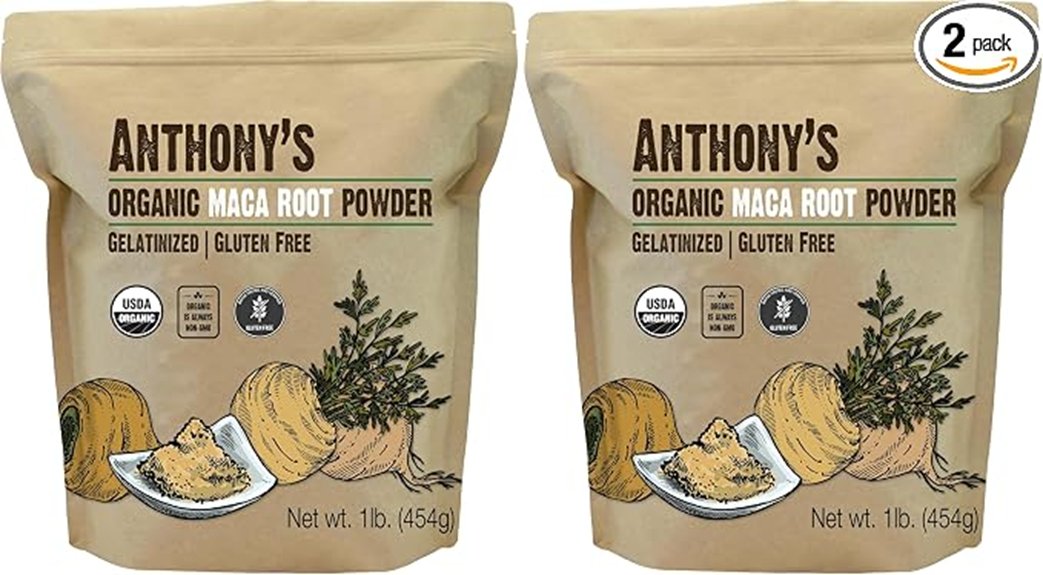
If you want maca that’s easier to digest and absorb, Anthony’s Organic Gelatinized Maca Root Powder (2-Pack) is a smart pick—each 1 lb package uses gelatinized maca, which many people find more bioavailable than non-gelatinized forms. You get two 1 lb bags, so you can keep up consistent use. You also benefit from USDA Certified Organic status, plus batch testing that verifies it’s gluten-free and Non-GMO. When you’re ready, you can blend it into smoothies, mix it into drinks, or add it to baking for an easy routine.
Best For: People looking for an organic, gelatinized maca powder that’s typically easier to digest and more bioavailable than non-gelatinized maca, and who want two 1 lb bags for consistent use.
Pros:
- Gelatinized maca may be easier to digest and absorb
- USDA Certified Organic, Gluten-free, and Non-GMO with batch testing
- Convenient for smoothies, drinks, and baking; comes as a 2-pack
Cons:
- Flavor and taste can be strong, which some users may find less appealing
- Gelatinized maca can cost more than non-gelatinized options
- Not ideal for people sensitive to maca or looking for a different form than powder
Navitas Organics Superfood+ Adaptogen Blend for Stress
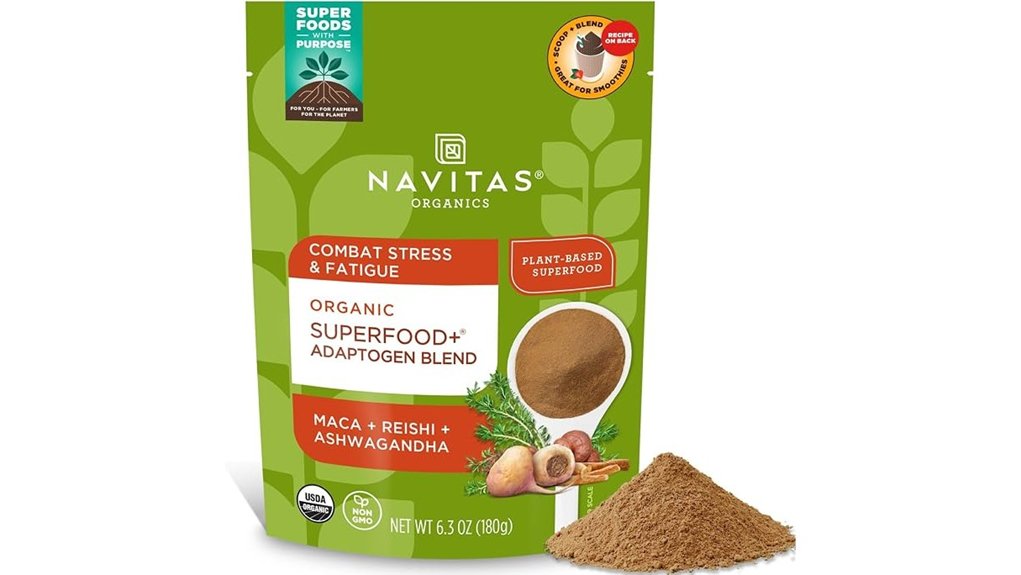
Navitas Organics Superfood+ Adaptogen Blend targets everyday stress with organic maca, reishi, and ashwagandha. You use it to help combat daily stress and fatigue while supporting your endocrine system for more balanced sleep and mood. It also helps you build energy and maintain a resilient stress response. Mix one serving into smoothies for an easy boost, or pair the malty, earthy flavor with nut butters and cacao. You get organic, non-GMO, vegan, gluten-free, keto, and paleo support—no added sugar, fillers, or preservatives. Plus, third-party tested ensures quality and nutrient density.
Best For: People looking for an organic, non-GMO adaptogen blend (maca, reishi, and ashwagandha) to support daily stress, sleep/mood balance, and resilient energy.
Pros:
- Supports stress and fatigue with adaptogens plus endocrine-system balance
- Organic, non-GMO, vegan, gluten-free, keto, and paleo-friendly with no added sugar, fillers, or preservatives
- Third-party tested for quality and nutrient density
Cons:
- Malty, earthy flavor may not appeal to everyone
- Requires blending/mixing (e.g., into smoothies) for best use
- Contains specific adaptogens that may not suit everyone, especially those sensitive to herbal supplements
BulkSupplements.com Black Maca Powder Vegan 1kg
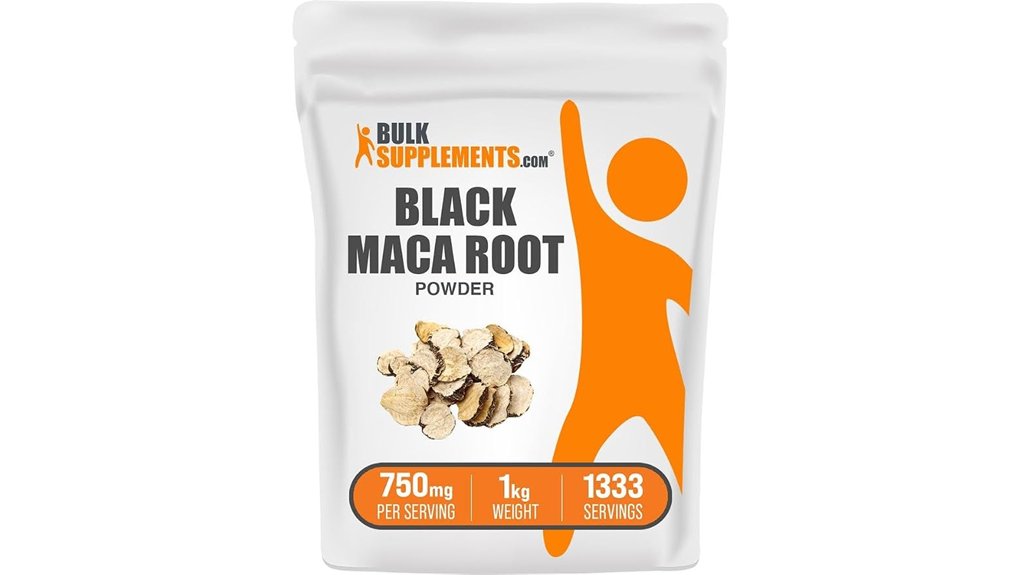
BulkSupplements.com Black Maca Powder comes as a 1kg jar of vegan, gluten-free black maca powder. You get a 750mg serving and an easy daily format that blends into water, smoothies, or simple routines. You’re also choosing a blend of natural nutrients, including vitamins, minerals, antioxidants, and essential nutrients, to complement your wellness goals. For quality, you benefit from cGMP manufacturing and rigorous third-party testing at multiple production stages. If you like bulk convenience, you’ll appreciate the consistent, no-complication powder. It also fits into a wider supplement shelf, from proteins to vitamins.
Best For: People looking for a vegan, gluten-free black maca root powder in bulk to easily support their daily wellness routine by mixing into water or smoothies.
Pros:
- cGMP manufacturing with rigorous third-party testing at multiple production stages
- Vegan and gluten-free powder format (750mg serving) for convenient everyday use
- Natural nutrient support, including vitamins, minerals, antioxidants, and essential nutrients
Cons:
- Powder may not be as convenient as capsules or ready-to-drink options
- No specific dosing or targeted outcomes are provided beyond general wellness support
- 1kg bulk size may be too large for those who only want to trial maca briefly
Oregon’s Wild Harvest 1:3 Organic Maca Root Extract, 1 Fluid Ounce
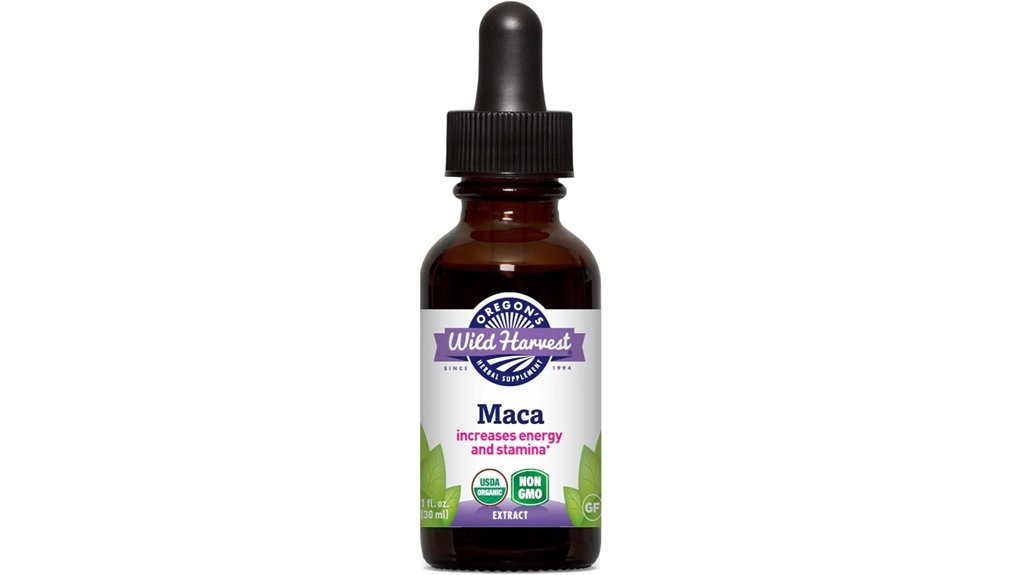
Oregon’s Wild Harvest 1:3 Organic Maca Root Extract delivers concentrated, USDA-certified organic maca in a 1 fluid ounce bottle. You get a 100% vegetarian formula made with sustainable methods under Oregon Tilth standards. When you choose this extract, you avoid excipients, stearates, and binders, so the product stays clean and simple. It’s free from dairy, wheat, peanuts, soy, and corn allergens, and it has no artificial flavors or colors. You’ll also appreciate that it involves no animal testing or byproducts, manufactured with care in Redmond, Oregon, using careful harvesting to prevent adulteration.
Best For: People looking for a USDA-certified organic, 1:3 concentrated maca root extract in a clean, vegetarian formula that’s free from common allergens and artificial additives.
Pros:
- USDA Certified Organic (Oregon Tilth) and made with sustainable methods
- Vegetarian, no animal testing or byproducts
- Free from excipients, stearates, binders, and common allergens (dairy, wheat, peanuts, soy, corn)
Cons:
- Concentrated 1:3 extract may be too strong for some users depending on desired dosage
- Availability and freshness can vary since it’s a botanical extract
- All-in-one extract—no additional ingredients may not suit people seeking a maca blend formula
NusaPure Black Maca Root 750mg Vegan Capsules (2-Pack)
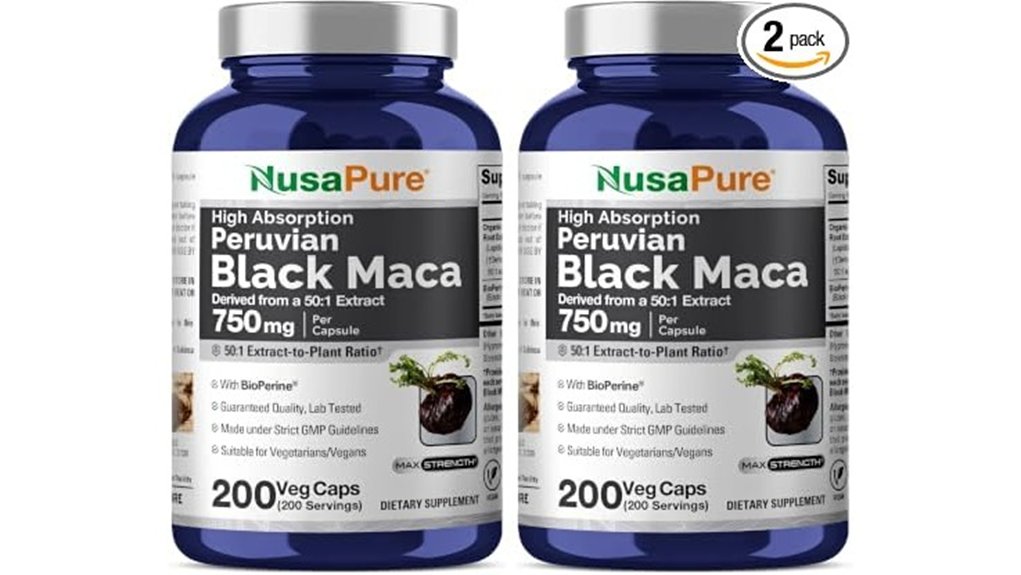
If you want a simple, vegan-friendly maca option, NusaPure Black Maca Root 750mg Vegan Capsules (2-Pack) makes it easy—each capsule delivers 750 mg of Peruvian black maca. You get a streamlined, non-GMO formula with no unnecessary ingredients, using a high-potency 50:1 extract from Lepidium meyenii. Since the capsules are pre-measured, you skip scooping or mixing and just take what you need. Each bottle includes 200 vegetarian capsules, designed for daily use. You’ll also appreciate that it’s manufactured in the USA, follows cGMP standards, and fits vegetarian and vegan lifestyles.
Best For: People looking for a simple, vegan-friendly black maca supplement (750 mg per capsule) for everyday use.
Pros:
- Non-GMO, vegan formulation with no unnecessary ingredients
- High-potency 50:1 extract for strong dosing in convenient capsules
- Made in the USA and manufactured under cGMP standards
Cons:
- Capsule form may not suit those who prefer maca powder or liquid formats
- The label doesn’t specify whether the maca is standardized for specific compounds
- Two-pack sizing may be more than some users want if they only need a short trial
Factors to Consider When Choosing a Maca Root Supplement
When you choose a maca root supplement, check the form and bioavailability (powder vs capsules) so you know how much you’ll actually absorb. Look for organic and non-GMO standards, then confirm potency and extract ratio on the label. Also prioritize third-party testing to verify quality and consistency before you buy.
Maca Form And Bioavailability
Choosing the right maca form can make a noticeable difference in how well your body absorbs it. Gelatinized maca, made by heating the root to break down starches, often improves digestibility and bioavailability compared with raw maca powder, whose nutrients may be less accessible. Black maca is frequently marketed as especially nutrient-dense and may offer stronger hormonal support, but your results also depend on the supplement’s extraction process and manufacturing standards. If you choose powders, you’ll need to mix them into foods or beverages, which can affect consistency. Capsules can simplify dosing and help you take the same amount every time. Look beyond color and claims, because processing quality directly influences potency and how effectively maca works for you.
Organic And Non-GMO Standards
Organic and non-GMO standards give you a clear way to evaluate maca root supplements beyond marketing claims. When you choose USDA Certified Organic maca, you confirm it’s grown without synthetic pesticides or fertilizers, which supports both your health and the environment. Look for non-GMO certification too, since it tells you the crop hasn’t been genetically modified and fits traditional farming preferences. These standards also push manufacturers toward rigorous testing and verification, so you get better assurance of quality and safety. If the label is organic and non-GMO, you’re more likely to avoid artificial additives and get a cleaner supplement experience. Ultimately, your choice can support ethical agriculture and help local farmers protect local ecosystems.
Potency Levels And Extract Ratio
Potency levels and extract ratios largely determine how strongly a maca root supplement may work for you, even if two products share the same “maca” label. You’ll notice dosages often range from 500 mg to 1,000 mg per serving, and that amount directly impacts perceived effectiveness. Extract ratios like 10:1 or 50:1 tell you how concentrated the active compounds are—higher ratios usually deliver more potent effects. If you want better absorption, consider gelatinized maca, since processing can improve digestibility and bioavailability versus raw forms. Also pay attention to color: black maca is often linked with increased energy and stamina, while red and yellow may differ in focus. Finally, don’t guess—choose brands with third-party testing to confirm the labeled potency.
Capsule Vs Powder Convenience
When you compare maca root supplements, capsule convenience versus powder flexibility often decides what you’ll actually stick with. If you want culinary options, you’ll likely prefer powders: gelatinized maca blends easily into smoothies, drinks, and baking. That said, powder servings can run larger per scoop, so you may need more powder (or more scoops) to match the dosage you’d get from a capsule. Capsules win for busy schedules because you don’t have to measure or mix—just swallow for precise dosing. If you care about maximizing benefits, you may like gelatinized powders, since they can support better nutrient absorption. Also consider taste: powders can be malty, while capsules stay tasteless.
Third-Party Testing Practices
Third-party testing practices help you verify what’s in your maca root supplement and how safe it is. Look for independent labs that screen for contaminants like heavy metals, pesticides, and microbial pathogens. These checks protect you by confirming the product is free from harmful substances. Next, you want potency and purity verification, so the supplement actually contains the amount of maca root listed on the label. Third-party analyses also detect hidden problems such as fillers, additives, or other unlisted ingredients that can reduce quality. If the brand provides third-party certification, you get extra confidence that it meets relevant industry standards and regulations. Finally, choose companies that test regularly, so every batch stays consistent in quality.
Dietary Fit Gluten Free Vegan
If you follow a gluten-free, vegan lifestyle, start by confirming the maca root supplement clearly states it’s gluten-free and vegan on the label. Next, look for reliable certifications showing it’s safe for gluten sensitivities and celiac—don’t just trust vague claims. You should also choose vegan formulations, since they avoid any animal-derived ingredients. If you want extra peace of mind, pick products labeled non-GMO, which typically means they’re made from ingredients without genetically modified organisms. The best fit is a formula that checks both boxes, because it supports more dietary needs in one supplement. Finally, verify third-party testing and certifications. This helps ensure the product truly meets its gluten-free and vegan promises, not just marketing.
Common Questions
How Long Does It Take to Feel Benefits From Maca Root Supplements?
You usually start to notice maca root supplement benefits within 2–4 weeks. Some people feel energy or mood changes sooner, in as little as a few days, but those effects can be subtle. For libido, fertility support, or hormone-related goals, it often takes 4–8 weeks to judge results. You should take it consistently and give it a full trial before switching doses or brands. If you feel worse, stop.
Are Maca Supplements Safe for Pregnancy, or Should They Be Avoided Entirely?
Maca supplements aren’t automatically unsafe in pregnancy, but you shouldn’t take them casually. You should avoid using maca “for fertility” or hormone-like effects unless your OB-GYN okays it. Evidence in pregnancy is limited, and product quality varies. If you’re already taking maca, you should stop and contact your clinician. Ask about your medical history, dose, and third-party testing before you resume.
Can Maca Root Affect Hormone Levels or Interfere With Thyroid Medication?
Yes—maca root can affect hormone-related signaling, so you should be cautious if you have hormone-sensitive conditions. Some people report changes in libido or cycle patterns, which suggests possible endocrine effects. For thyroid medication, there’s no proven direct interference, but it could indirectly matter if it alters thyroid function or overall absorption. Talk to your prescriber, and keep timing consistent. When in doubt, double-check labs.
What’s the Difference Between Gelatinized Maca and Regular Maca Root?
Gelatinized maca usually undergoes heating or processing to help soften its fibers, making it easier for your body to digest. Regular maca root stays more “raw” and may feel harsher, sometimes causing more stomach discomfort. Because gelatinization can reduce certain compounds that affect texture and digestion, you might tolerate it better. Choose gelatinized if you want smoother digestion; choose regular if you prefer minimal processing and still tolerate it well.
How Should Maca Be Dosed if I’M Taking Antidepressants or Hormonal Birth Control?
If you’re taking antidepressants or hormonal birth control, start cautiously with maca: try 500–1000 mg daily with food for 2–4 weeks, then reassess. Don’t exceed 1500–3000 mg/day unless your clinician okays it. Maca may affect hormone signaling and could interact with antidepressants in sensitive people, so monitor mood, sleep, and libido changes. Ask your prescriber first, especially if you have bipolar disorder, seizures, or thyroid conditions.
Overall
When you pick a maca root supplement for 2027, you’re choosing what fits your body and your busy routine. Compare forms—powder, extract, or capsules—check sourcing and strength, and prioritize third-party testing when possible. Notice how you’ll use it: daily smoothies, steady capsules, or measured doses. With the right match, you can support energy, balance, and mood—while savoring every satisfying step toward feeling better.
2 thoughts on “5 Best Maca Root Supplements for 2027”